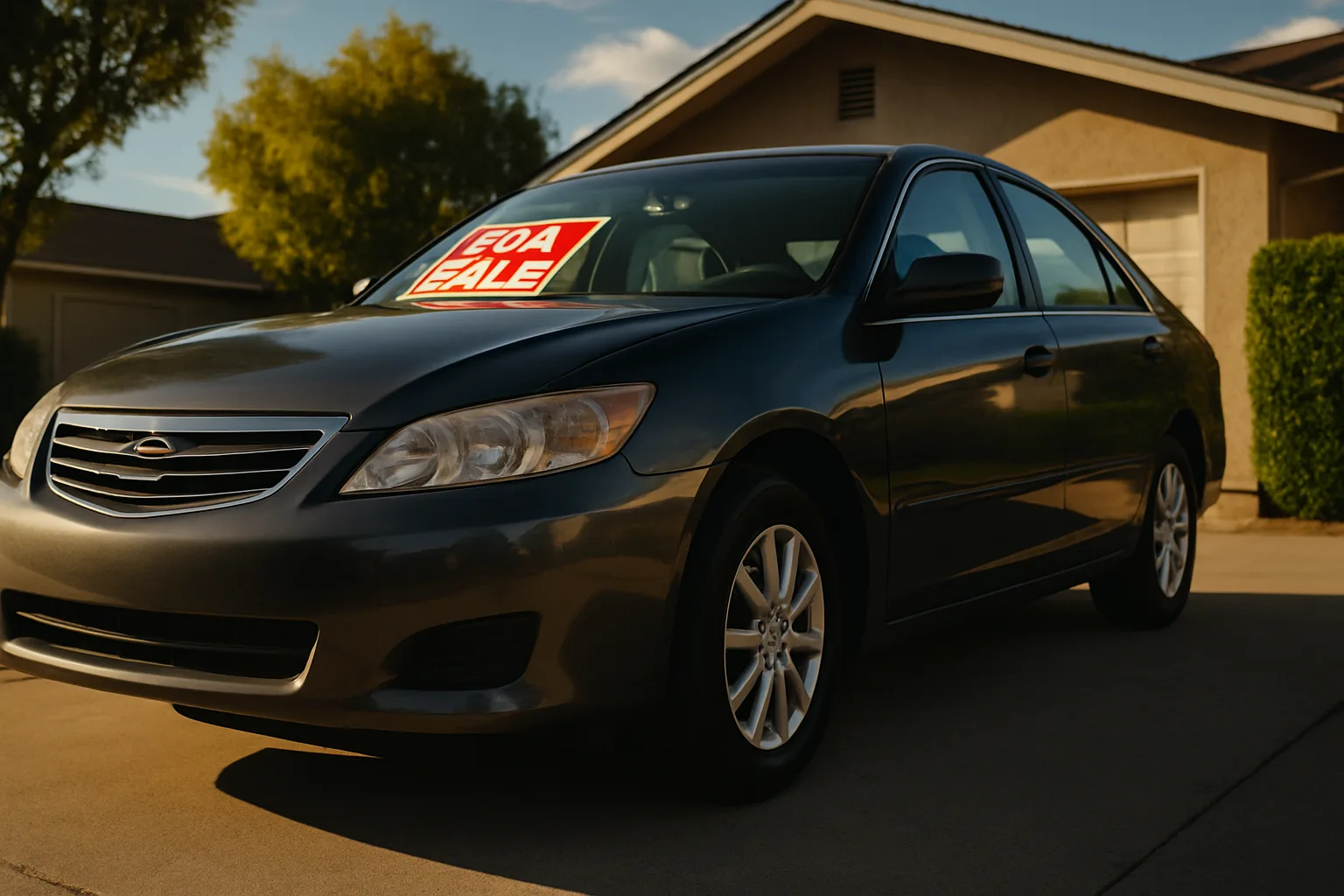
Your car got totaled. The insurance company cut you a check, slapped it with a salvage title, and now you're stuck holding a vehicle that every dealership and private buyer treats like radioactive waste. If you're in Riverside or anywhere else in California trying to figure out what a written-off car is actually worth — and whether you can get real money for it — this is the breakdown you need.
Insurance write-offs and salvage titles crush resale value fast. But "less than a clean title car" doesn't have to mean "scrap-only money." Understanding how the title classification system works, what buyers actually pay attention to, and where to sell a salvage-title vehicle can be the difference between getting a fair offer and leaving hundreds — sometimes thousands — of dollars on the table.
Whether you're trying to sell my car for cash after an accident, clear an estate vehicle, or just move on from a car you can no longer insure or drive, you deserve a straight answer. Here it is.
What an Insurance Write-Off Actually Means for Your Car's Value
When an insurer declares a vehicle a total loss, they're making a math decision — not a mechanical one. If the estimated repair cost exceeds a set percentage of the car's pre-accident actual cash value (ACV), they write it off. That threshold varies by state. In California, insurers often use 75–80% as their benchmark, though it can shift depending on the policy and the vehicle's age.
Here's what most car owners don't realize: a write-off doesn't automatically mean the car is undriveable or worthless. It means the insurance company decided it wasn't worth paying to fix it relative to its market value. You might have a car with a bent frame, or you might have one with a crushed quarter panel and a perfectly good engine. The insurer treats both the same way on paper.
Once that decision is made, the vehicle gets a salvage title in California through the DMV. From that moment forward, the car carries a permanent record. Private buyers get nervous. Lenders won't finance it. And most dealerships won't touch it at trade-in — or they'll offer you scrap-tier money because they know you have fewer options.
The practical impact on resale value? Salvage-titled vehicles typically sell for 20–40% less than equivalent clean-title cars in the private market, depending on year, make, model, and the nature of the damage. High-demand vehicles with strong parts markets — think late-model trucks, popular import sedans, SUVs — tend to hold more of their value even with a salvage title because there's genuine buyer demand.
Salvage vs. Rebuilt Title: The Difference Buyers Actually Care About
Not all damaged-title vehicles sit in the same bucket. California recognizes two main post-accident classifications that buyers and sellers need to understand before they price anything.
Salvage Title: Issued when a vehicle is declared a total loss. The car cannot be legally driven on public roads in California until it passes a DMV inspection and gets rebuilt-title status. A salvage-titled car can be sold as-is — but only for parts, scrap, or to a licensed dealer or dismantler. Private sales to someone who intends to drive it are restricted.
Rebuilt/Reconstructed Title: After a salvage vehicle is repaired and passes a California DMV Brake and Light inspection (and in some cases a more thorough inspection), it can receive a rebuilt title. A rebuilt-title car can be registered and driven legally — but it still carries the history. Carfax and AutoCheck both flag it. Insurance companies often limit coverage to liability-only for rebuilt-title vehicles, or charge significantly higher premiums.
For sellers, this distinction matters because:
- A salvage title limits your buyer pool dramatically — mostly dealers, dismantlers, rebuilders, and platforms equipped to handle them
- A rebuilt title opens you up to more buyers but still comes with a discount versus a clean title — typically 20–30% less in the private market
- Neither status disappears from the vehicle history report — ever
If you're sitting on either type in Riverside and wondering whether to repair it, sell it as-is, or scrap it, the answer depends heavily on what the car is worth at its current condition versus what repairs would actually cost you out of pocket.
Cash for Cars California: What Salvage and Write-Off Vehicles Actually Sell For
Let's talk numbers in real terms — without inventing figures that don't hold up.
Scrap metal value is the floor. A typical passenger car weighs between 3,000 and 4,000 pounds. Ferrous scrap prices fluctuate constantly — and we mean weekly, sometimes daily — but a car that goes out purely as scrap metal is going to net you a fraction of what a running-condition or parts-viable vehicle brings. If you want to schedule a free scrap car pickup, that's a legitimate option. But it should be your last resort, not your first call.
Above scrap, the value of a written-off or salvage-title car depends on:
- Whether it runs and drives — a car that moves under its own power is worth more to more buyers
- The type of damage — flood and fire damage typically draws lower offers than collision damage, because flood and fire compromise electrical systems and structural integrity in ways that are harder to verify
- Parts demand — a late-model Toyota or Honda with a salvage title is more attractive to rebuilders and dismantlers than an obscure import with hard-to-find parts
- Mileage and pre-accident condition — a low-mileage car that got rear-ended commands more interest than a high-mileage vehicle with pre-existing issues
- Your location — in Riverside and the broader Inland Empire, the density of auto dismantlers, rebuilders, and salvage dealers creates genuine buyer competition for the right vehicles
The mistake most sellers make is accepting the first offer. One call to one local junkyard gives you one data point. That's not price discovery — that's guessing. Platforms like SMASH connect sellers with vetted buyers who compete for vehicles, which is how you find out what your car is actually worth in today's market — not what one buyer decided to tell you.
If you want to get a free car valuation, start there before you agree to anything.
Why Selling a Written-Off Car in Riverside Is Different Than You Think
Riverside sits at the crossroads of the Inland Empire's dense automotive ecosystem. There are more auto dismantlers, salvage yards, and specialty buyers per square mile here than in most California markets. That should work in your favor — but only if you're reaching more than one of them.
The reality for most car owners in Riverside is that they call the first number they find, get an offer that sounds reasonable because they have no baseline, and take it. That's the old way. One buyer. One call. No competition. No transparency.
When you use a platform built for competitive offers — like SMASH — you're not calling one yard. You're letting vetted buyers see your vehicle details and compete. That competition is how price discovery actually works. It doesn't guarantee any specific number, but it does mean you're not leaving money behind because you only talked to one person.
For cash for cars California situations — especially write-offs, salvage titles, uninsured vehicles, or estate cars — documentation matters. Buyers want to see:
- Title (salvage, rebuilt, or clean — whatever you have)
- Photos of the damage from multiple angles
- Vehicle identification number (VIN) — buyers use this to pull history reports instantly
- Any repair records if the vehicle has been partially worked on
- Confirmation of whether the car starts and drives
The more documentation you provide upfront, the faster and more confidently buyers can make offers. If you're not sure where to start, browse car selling tips on our blog for practical guidance on prepping your vehicle information before you list it.
Don't Let "Salvage Title" Talk You Into Scrap-Only Money
This is where a lot of Riverside sellers get burned — and it's worth saying directly.
Scrap removal services are useful. If your car is genuinely crushed, flooded beyond repair, or stripped to a shell, scrap metal value is an honest outcome. But too many sellers with partially damaged, salvage-titled vehicles accept scrap offers for cars that have real resale value above their weight in steel.
A 2021 pickup truck with a salvage title after a side-impact collision — with a working engine, intact cab, and good tires — is not a scrap car. A 2019 sedan that took a front-end hit but has a clean interior and low miles is not a scrap car. These are vehicles that can command real offers from rebuilders, dismantlers, and private buyers willing to do the work.
The difference between a scrap offer and a real buyer offer on a vehicle like this can easily be several hundred to over a thousand dollars. Don't skip that step because the title says salvage.
To connect with trusted auto buyers in the USA through SMASH Cars and get an actual offer on your written-off or salvage-title vehicle — not just a guess at scrap weight — start with a free valuation. It costs nothing to find out what your car is actually worth to buyers who specialize in exactly this type of vehicle.
When Scrapping Is the Right Call — and How to Get It Right
There are legitimate situations where scrapping a written-off vehicle is the correct move. Knowing when that's true saves you time and frustration.
Consider scrap or free junk car removal when:
- The vehicle has severe flood or fire damage that compromised the drivetrain and electronics
- The frame is bent or crushed in a way that makes rebuilding economically impractical
- The car is missing its catalytic converter, engine, or other high-value components and has already been partially stripped
- The title is missing or heavily complicated — though SMASH can help navigate some of these situations
- The vehicle is an older model with low parts demand and minimal market interest
Even in scrap situations, you have options beyond calling a single yard. Scrap metal prices for vehicles fluctuate based on ferrous commodity markets, and not all buyers pay the same rate. Getting multiple quotes — even for a pure scrap vehicle — is worth the 20 minutes it takes.
Disclaimer: Scrap metal prices and vehicle resale values change frequently based on market conditions, commodity prices, and regional demand. Always check current rates before accepting an offer.
Frequently Asked Questions
Q: Can I sell a salvage-title car in Riverside, California without repairing it?
Yes. In California, a salvage-title vehicle can be sold as-is to a licensed dealer, dismantler, or through platforms that connect you with buyers who specialize in salvage and damaged vehicles. You cannot legally sell a salvage-title car to a private buyer who intends to drive it on public roads without it first going through the DMV rebuilt-title process. Disclosure of the salvage status is required in any sale.
Q: How much less is a salvage-title car worth compared to a clean title?
It depends on the vehicle, the damage type, and the buyer pool. In general, salvage-title vehicles sell for 20–40% less than equivalent clean-title cars in the private market. Rebuilt-title vehicles tend to close that gap slightly but still carry a discount. The best way to know what your specific car is worth is to get competitive offers from buyers who specialize in written-off and salvage vehicles — not just one quote from a single yard.
Q: We buy junk cars Riverside — how do I know if my car qualifies?
Most vehicles qualify for cash offers regardless of condition — running or not, salvage title or clean, accident damage or age-related wear. Buyers in the Riverside area purchase vehicles across a wide range of conditions. The key information they need is your VIN, an honest description of the condition, photos of any damage, and your title status. From there, they can make a real offer.
Q: Is free junk car removal available in Riverside?
Yes. Many buyers who purchase salvage and junk vehicles include free pickup as part of their offer. If a buyer is offering you cash for your car, towing is typically included at no cost to you. Always confirm towing costs upfront before you agree to any offer — legitimate buyers in the Riverside area generally don't charge sellers for removal.
Q: What documents do I need to sell a written-off or salvage-title car in California?
You'll need the salvage title (or rebuilt title if applicable) in your name, a valid government-issued ID, and a bill of sale. If the title is lost, you'll need to apply for a duplicate through the California DMV before the sale can proceed. Some buyers can help guide you through that process. Having your VIN and current registration on hand speeds things up significantly.
If you're done guessing what your written-off car is worth and ready to find out what buyers will actually pay — connect with trusted auto buyers in the USA through SMASH Cars and get your free offer at smash-cars.com. No pressure, no subscription, no obligation. Just real buyers, real competition, and a real number for your vehicle.
Stay current on scrap metal market trends and vehicle selling insights by following SMASH on LinkedIn.
```