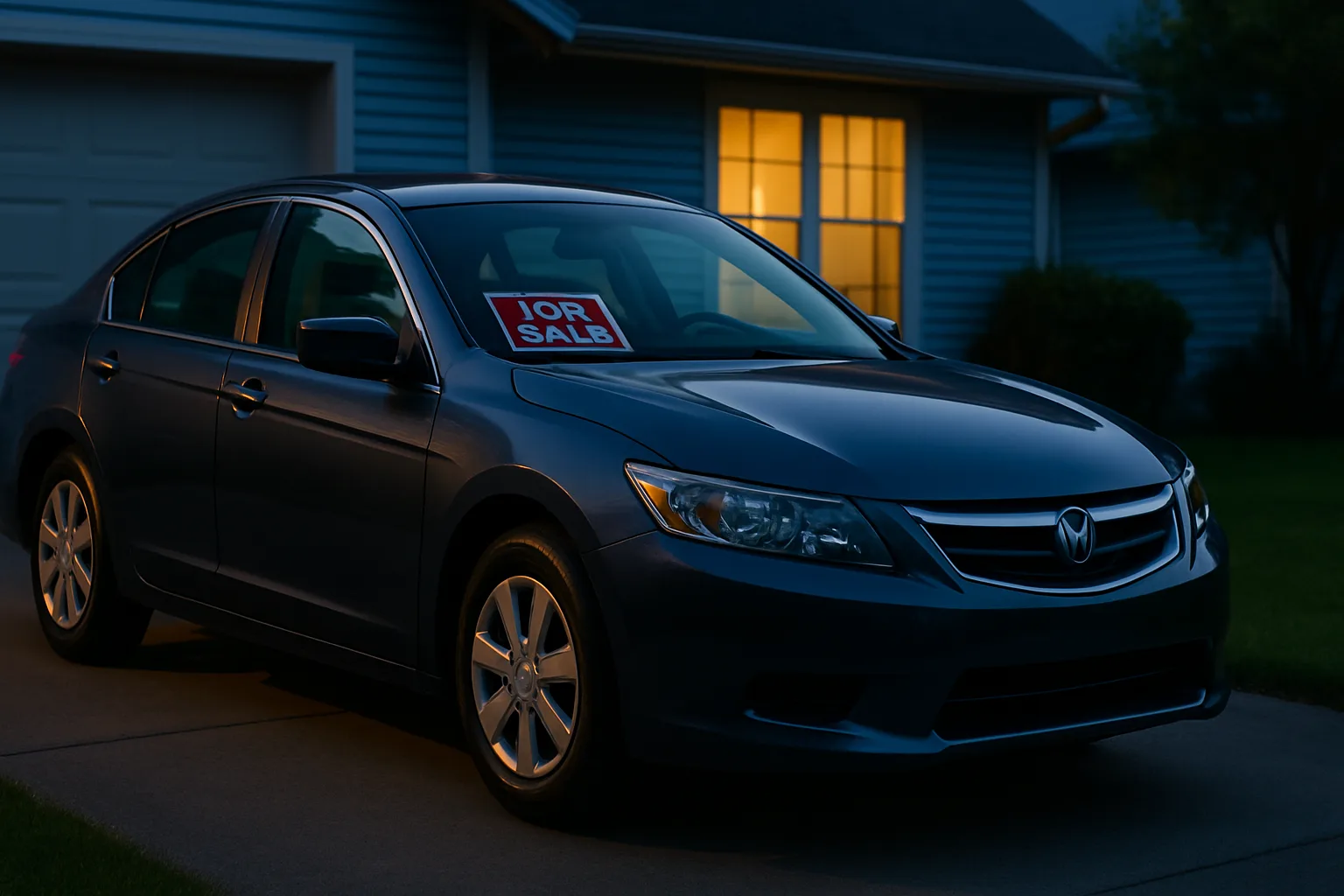
Most people donating a car think they're getting a great tax break. In reality, the deduction is often far smaller than the car's actual value — and sometimes worth almost nothing at all.
If you're sitting on an unwanted vehicle in Warren, Michigan, this is worth reading before you sign anything over to a charity. The difference between donating and selling could mean hundreds — sometimes thousands — of dollars in your pocket instead of a line on your tax return.
Car donation sounds like a win-win. You get rid of a vehicle you don't need, the charity benefits, and you get a tax deduction. But the math doesn't always work the way people expect. If you're trying to sell my junk car Warren residents often search for answers before they realize that "donating" might actually cost them money compared to selling outright.
Let's break down exactly how car donation tax deductions work in 2026, when they're worth it, and when you're better off getting cash.
How Car Donation Tax Deductions Actually Work in the US
The IRS rules on donated vehicles are strict, and they've been tightened significantly over the years. Here's the core rule you need to know: if the charity sells your donated car, your deduction is limited to the proceeds they actually receive — not what you think the car is worth.
So if you donate a car you believe is worth $3,500 and the charity auctions it off for $800, your deduction is $800. The charity sends you a Form 1098-C within 30 days of the sale documenting that number. That's what goes on your return.
There are limited exceptions. If the charity uses the vehicle directly — for delivering meals, transporting clients, running programs — you may be able to deduct fair market value. If they sell it to a needy individual at a significantly below-market price, similar rules can apply. But these cases are the exception, not the standard charity car donation model.
There's also a threshold issue. You can only benefit from a charitable deduction if you itemize deductions on your federal tax return. The standard deduction in 2026 is substantial, and the majority of American filers don't itemize. If you take the standard deduction — which most people do — you get zero tax benefit from donating your car. Zero.
The Real Numbers: When Donation Beats Selling, and When It Doesn't
Let's be honest with the math. Say your old car in Warren has a realistic sale value of $2,000 as a running used vehicle. You're in the 22% federal tax bracket and you do itemize your deductions.
- Charity sells it at auction for $900 — your deduction value is $900
- At 22%, that saves you roughly $198 in federal taxes
- You gave up $2,000 to save $198
Even if you're in a higher bracket, the arithmetic rarely pencils out in your favor when the charity is just reselling the car. The only scenario where donation gets close to competitive is when the charity uses the vehicle directly, you itemize, and you're in a higher tax bracket — and even then, selling to the right buyer will typically put more money in your hands.
Now consider the other side. If your car genuinely runs, has decent mileage, and you want to sell my car fast in Warren, connecting with competitive buyers through a platform like SMASH Cars means you're getting actual offers — not a receipt for whatever a downstream auction happened to fetch on a Tuesday afternoon.
The situation is different if your car is truly end-of-life — crushed, flooded, stripped, or so mechanically compromised it has almost no market value. In that case, the gap between donating and selling narrows. But even then, a scrap buyer or salvage buyer will typically offer you something in cash, same-day removal, and no paperwork headaches.
What About Damaged, Uninsured, or Inherited Vehicles in Warren?
A lot of the vehicles people consider donating fall into specific categories: cars after an accident, cars without current insurance, inherited vehicles from an estate, or vehicles that haven't run in years. These are all situations where people assume selling isn't an option — so they default to donation thinking it's the easiest exit.
That assumption is outdated. In 2026, there are active buyers for all of these vehicle types in Michigan and across the US.
- Sell car after accident: Even a totaled or written-off vehicle has salvage value — parts, scrap weight, and sometimes frame or drivetrain components that buyers want.
- Sell uninsured car: You don't need insurance to sell. You need the title (or proper estate documentation). That's it.
- Sell inherited car: Estate vehicles are sold regularly. With the right title transfer paperwork, you can sell an inherited car without ever having driven it.
- Sell car no inspection: Scrap and salvage buyers don't require a passing inspection. They're pricing based on condition, weight, and components — not roadworthiness.
If you're dealing with a vehicle like this in Warren or anywhere in Michigan, the first move is to get an actual offer — not to assume it's only worth a donation receipt. You can get a free car valuation and know your real number before you decide anything.
Sell Car for Scrap vs. Donate: The Scrap Value Question
Here's something most people don't consider: the scrap value of a vehicle is a real floor price. Even a dead car has metal weight. Steel, aluminum, copper wiring, and critically — catalytic converters.
Catalytic converters contain platinum group metals (PGMs) — platinum, palladium, and rhodium. These are globally traded commodities, and the converter on your car may carry real market value. In competitive buying environments, including catalytic converter auction formats, those values get surfaced properly. When you donate a car, whoever processes it captures that value — not you.
This is one of the clearest arguments for selling over donating when your car is at end-of-life. The scrap metal content alone — particularly the catalytic converter — can push your offer meaningfully above a donation receipt. A transparent, competitive buyer surfaces these values. A charity car donation program doesn't share them with you.
When you're looking to sell scrap car in Michigan, the right buyer accounts for all of this — vehicle weight, metal composition, and high-value components — not just a flat "scrap price" based on curb weight. For more on getting full value from your vehicle's parts and metals, browse car selling tips on our blog.
When Donation Actually Makes Sense
There are legitimate reasons to donate a car. This isn't a blanket argument against it. Here's when it makes sense:
- You itemize your taxes and you're in a higher bracket. If you're itemizing and in the 32%+ bracket, the tax math improves. Still do the comparison, but it's a tighter race.
- The charity will use the vehicle directly. Programs that actually put donated cars to work — driving staff, transporting people in need — allow fair market value deductions. These are rarer but they exist.
- The vehicle has minimal market value and you genuinely want to support the charity. If the car is worth $200 in scrap and you're choosing between a $60 scrap offer and giving it to an organization you believe in, the donation is a reasonable personal choice.
- Convenience is the priority. Some people genuinely don't want to deal with calls, negotiations, or paperwork. Donation is simpler — though competitive car buyers like SMASH also handle pickup, paperwork, and fast offers, so the convenience gap is smaller than it used to be.
Outside of these scenarios, most people in Warren and across Michigan are better served by getting a real offer for their unwanted vehicle before making a final decision.
How SMASH Cars Helps You Get More Than Scrap Value
The old model for selling a junk car was one phone call to one buyer, a lowball offer, a shrug, and a check you didn't feel great about. That model still exists — you just don't have to use it.
SMASH brings competition to the process. When buyers compete, price discovery happens. You find out what your vehicle is actually worth in the market — not what one buyer was willing to offer on a slow afternoon. There are no subscription fees. SMASH only benefits when you do.
Whether you're trying to sell car for scrap collection, unload a post-accident vehicle, deal with an estate car, or simply move on from a vehicle you've been ignoring in the driveway for two years — getting a real cash offer takes minutes. Free car valuation, vetted buyers, fast removal. You can connect with trusted auto buyers in the USA through SMASH Cars and know your number before you make any decisions.
Donation is a choice. It should be an informed one. Don't give away value you didn't know you had.
Frequently Asked Questions
Q: Is it better to donate or sell my junk car in Warren, Michigan?
In most cases, selling puts more money in your pocket. Car donation tax deductions are limited to what the charity receives at resale — often far below the car's actual market or scrap value. Unless you itemize your taxes and the charity uses the vehicle directly, selling through a competitive buyer will typically net you more. Residents looking to sell my junk car Warren have real cash options worth exploring first.
Q: How much is the tax deduction for donating a car in 2026?
If the charity sells your donated car, your deduction equals the sale proceeds — not the car's estimated value. The charity must send you a Form 1098-C within 30 days of the sale documenting that amount. If you take the standard deduction (which most US taxpayers do), you receive no tax benefit at all from the donation.
Q: Can I sell my car fast in Warren without a title?
Title situations vary. In Michigan, a clear title significantly simplifies the sale and typically increases your offer. Some buyers work with vehicles that have title issues, but the process takes longer and the offer may be lower. If you've inherited a vehicle or lost the title, it's worth checking with the Michigan Secretary of State's office on the fastest path to a replacement or transfer.
Q: What happens to the catalytic converter when I donate my car?
The charity — or the processor they work with — captures that value. Catalytic converters contain platinum group metals with real market value, and in a competitive selling environment, that value comes back to you. When you donate, you give it up entirely. If your car has a working catalytic converter, that's a concrete reason to get a cash offer before donating.
Q: Can I sell a car in Michigan without insurance?
Yes. You do not need current insurance to sell a vehicle in Michigan. You need the title (or proper estate paperwork for inherited vehicles) and a valid ID. The buyer handles the rest. Lack of insurance is not a barrier to getting a cash offer and arranging pickup — it's one of the most common situations buyers in Michigan deal with regularly.
If you're ready to find out what your car is actually worth before making any decisions, getmyscrapcar.com is another resource worth checking out for scrap vehicle valuations in your area.
Stay current on scrap metal markets, car values, and industry news — follow SMASH on LinkedIn for regular updates.
```