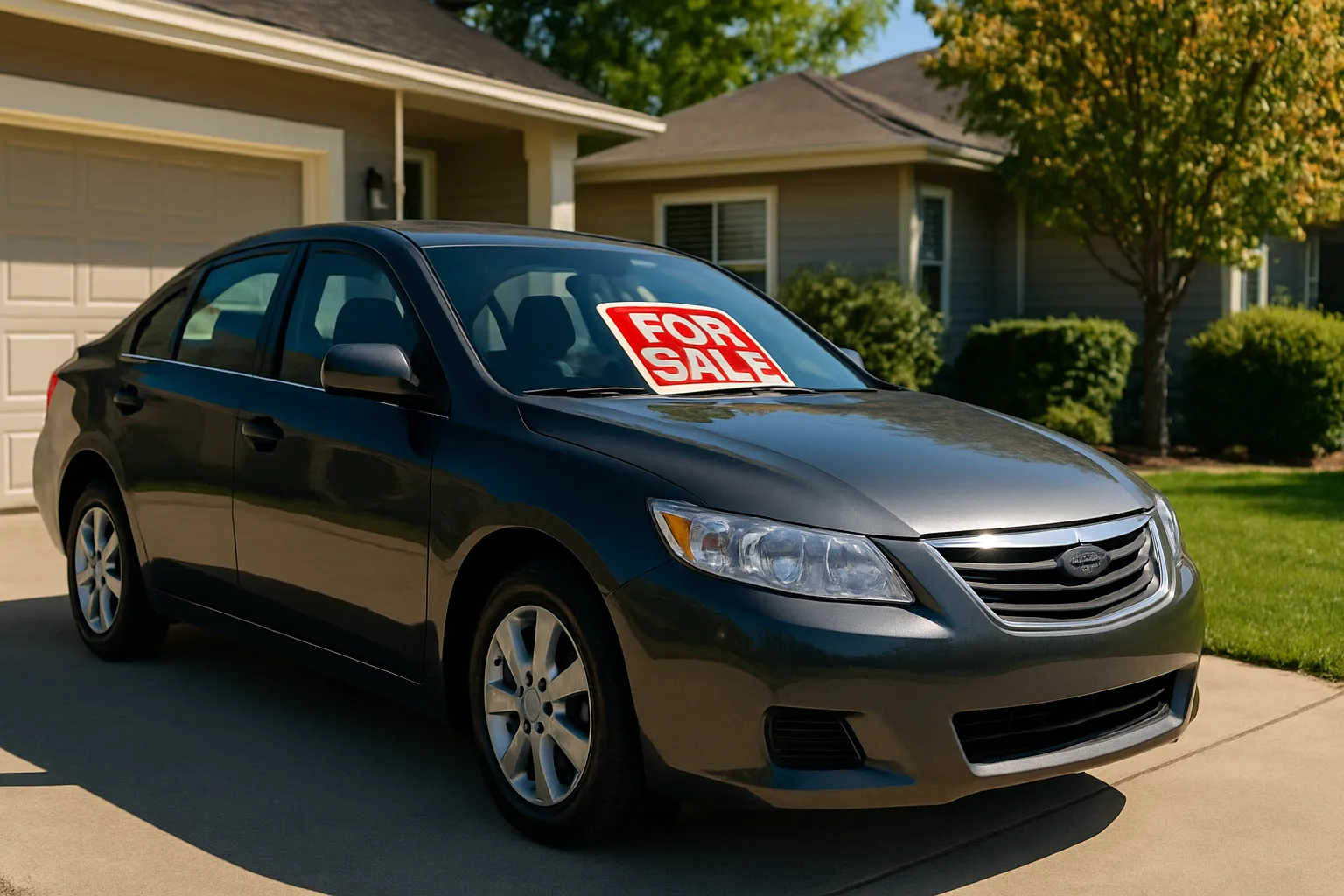
Your car won't start. It hasn't moved in months. And somehow, you're still responsible for it. Whether it's sitting in your driveway in Oakland, taking up space in a garage, or rusting in a lot after an accident — a non-running car is still worth money. More than most people think.
The mistake most sellers make is assuming a dead car is a scrap-only situation. It's not. Buyers across California and the broader U.S. market pay real cash for non-running vehicles every day — for parts, for rebuilds, for catalytic converters and metals. The key is knowing how to position your car and where to sell it.
This guide walks you through exactly how to sell my car for cash Oakland — even if it doesn't run, doesn't start, and hasn't seen the road in years.
Why a Non-Running Car Is Worth More Than Scrap Weight
Scrap yards pay by the pound. A typical passenger car weighs 3,000–4,000 lbs, and scrap steel prices fluctuate — but you're often looking at a base payout that reflects commodity value, not vehicle value. That's fine if the car is truly stripped and gutted. But most non-running cars aren't.
A car that won't start might still have a functional transmission, intact airbags, a good catalytic converter, a solid set of tires, or a body that's clean enough for a parts puller. Each of those components has individual market value. Selling your car through a platform that connects you to competitive buyers — rather than a single scrap yard — means those components factor into your offer.
- Catalytic converters contain platinum, palladium, and rhodium — valuable metals that buyers specifically seek out
- Transmissions and engines from common models often sell to rebuild shops
- Body panels, doors, hoods move quickly in markets where repair costs are high
- Wheels, tires, and rims have standalone resale value depending on condition and brand
- Airbag modules that haven't deployed are usable parts
The point isn't that every non-running car is a goldmine. It's that a single phone call to one scrap yard gives you one number. Competition gives you the market. That's the difference between leaving money on the table and actually getting what your vehicle is worth.
What to Do Before You List or Call Anyone
A little prep work goes a long way — even for a car that won't start. You don't need to fix anything. You just need to know what you have.
Start with the basics:
- Find your title. In California, selling a vehicle without a title is complicated. If you've lost it, apply for a duplicate through the California DMV before you list the car. Most serious buyers require a clean title — or at least a salvage title — to complete the transaction.
- Know your VIN. The Vehicle Identification Number tells buyers the year, make, model, trim level, and factory options. It also confirms whether the car has a branded title (salvage, flood, fire). Be upfront about title status — it affects your offer, but hiding it causes bigger problems later.
- Document what doesn't work — and what does. Be specific. "Won't start" is different from "blown head gasket" or "timing chain failure." The more detail you provide, the more accurate your offer. Buyers discount for unknowns. Specifics reduce that uncertainty.
- Take photos. Four exterior angles, the interior, the engine bay, and any visible damage. Photo documentation builds buyer confidence and reduces back-and-forth.
- Note the mileage. Even on a non-runner, odometer reading matters for parts valuation.
This takes 20–30 minutes. It's the difference between a lowball offer and one that reflects what your car actually is.
Your Options for Selling a Junk Car in Oakland
Oakland sellers have a few paths available. Not all are equal.
Private Sale
Listing on Craigslist or Facebook Marketplace can work, but non-running cars attract a narrow audience — mostly flippers and mechanics. Expect lowball offers, no-shows, and slow timelines. For most people dealing with an unwanted vehicle, this route isn't worth the time.
Scrap Yard Direct
Call a local yard, get one quote, accept or don't. Fast and simple. But you're getting one price from one buyer with no competition. That single buyer has every incentive to offer you the lowest number you'll accept.
Junk Car Removal Services
Services that specialize in non-running vehicles will tow the car for free and pay cash on pickup. This is convenient — and often the right move for truly end-of-life vehicles. If you want to sell my junk car Oakland without any hassle, this category of buyer is built for you. You can also explore scrap car removal services at GetMyScrapCar to understand your options before committing to any offer.
Competitive Buyer Platforms
The strongest option for most sellers. Platforms like SMASH connect your vehicle to multiple vetted buyers, which means your offer reflects actual market demand — not just one buyer's margin. When buyers compete, price discovery happens. You see what the market actually pays, not what a single yard is willing to offer. Connect with trusted auto buyers in the USA through SMASH Cars and find out what your non-running vehicle is actually worth today.
How to Get Cash for a Non-Running Car — Step by Step
Here's the practical sequence for selling a car that won't run or start in Oakland, California:
- Gather your documents. Title, registration, and photo ID. If you're handling an estate vehicle or selling a car that's been sitting without active registration, note this upfront — it's common and manageable.
- Get your VIN and mileage ready. Buyers will ask. Having it on hand speeds up the process.
- Take your photos. Even a beat-up car photographs better than you'd expect. Honest photos build trust and reduce renegotiation at pickup.
- Submit to multiple buyers or use a platform. Don't anchor to the first number you hear. Get at least two offers before deciding. Get a free car valuation to see what your vehicle is worth to real buyers — not just scrap weight.
- Confirm pickup logistics. Reputable buyers handle towing at no cost for non-running vehicles. Confirm this upfront. Never pay for removal.
- Sign the title and release of liability. In California, file a Notice of Transfer and Release of Liability with the DMV when the car changes hands. This protects you from any tickets, tolls, or liability after the sale.
- Get paid before the car leaves. Cash or certified payment on pickup. No legitimate buyer asks you to wait for payment after the vehicle is gone.
The whole process — from first offer to pickup — often happens within 24–48 hours for Oakland sellers. Same-day service is available in many cases.
Situations SMASH Cars Handles Every Day
Non-running car sales aren't unusual. They're actually the majority of what end-of-life vehicle buyers see. Here are the common scenarios where sellers in Oakland reach out:
- Cars after an accident — your insurer totaled it, or you decided not to claim it. Either way, you have a damaged vehicle that needs to go.
- Inherited or estate vehicles — a family member passed, and you're left with a car you didn't ask for and don't want to keep.
- Uninsured vehicles — the car lapsed on insurance and registration. It's still sellable. You can sell a car without insurance.
- Vehicles with a salvage title — salvage title cars have real market value, especially to rebuilders and parts buyers.
- Old cars after an upgrade — you bought something new and the old car is just sitting there. Sell it, don't donate it to the driveway.
- Flood or fire damaged cars — specific buyer pools exist for these. Disclose condition accurately and let competition sort out the price.
SMASH works with sellers across the U.S. — including Oakland and across California — in all of these situations. The platform is built for vehicles that don't fit neatly into a private sale. You can also browse car selling tips on our blog to see how other sellers navigated their specific situations.
What Affects Your Final Offer on a Non-Running Car
Buyers use several factors to determine what they'll pay. Understanding them helps you set realistic expectations — and present your vehicle in the best light.
- Year, make, and model — common vehicles have stronger parts markets. Imports and newer models often carry more valuable components.
- Why it doesn't run — a dead battery is different from a seized engine. The nature of the mechanical failure affects repair cost estimates.
- Body and interior condition — even on a non-runner, a clean interior and solid body panels increase parts value.
- Catalytic converter status — present and intact? That matters to buyers. Removed? That's disclosed upfront and reflected in the offer.
- Title status — clean title gets the strongest offers. Salvage title is still sellable. No title requires additional steps.
- Location and accessibility — is the car in a driveway, a parking structure, or on private land that requires special access? Towing logistics affect offers.
Disclaimer: Junk car prices fluctuate based on scrap metal markets, local demand, and vehicle condition. Always check current rates and get multiple offers before selling.
Frequently Asked Questions
Q: Can I sell my car for cash in Oakland if it doesn't have a title?
It's harder but not impossible. California requires a title for most vehicle transfers. If you've lost your title, apply for a duplicate through the California DMV before selling — it typically takes 15–30 days. Some buyers will work with you on title situations, but expect offers to reflect the added complexity.
Q: How much cash can I get for a non-running junk car in Oakland?
It depends on the vehicle — year, make, model, condition, and what's still intact. A non-running car with a good catalytic converter and solid body panels will bring more than a gutted shell. Get multiple offers rather than accepting the first number you hear. Prices fluctuate with scrap metal markets, so check current rates before selling.
Q: Do I have to pay for towing when I sell my junk car in Oakland?
No. Reputable buyers — including services listed on platforms like SMASH — handle towing at no cost to you. If a buyer asks you to pay for pickup before the sale, that's a red flag. Free tow is standard for non-running vehicle sales.
Q: How fast can I sell a car that doesn't start in Oakland, California?
Often within 24–48 hours. Some buyers offer same-day pickup depending on location and availability. Having your title, VIN, and photos ready before you reach out speeds the process significantly.
Q: What paperwork do I need to sell a non-running car in California?
You'll need the vehicle title signed over to the buyer, a valid photo ID, and you should file a Notice of Transfer and Release of Liability with the California DMV immediately after the sale. This protects you from future liability tied to the vehicle after it leaves your possession.
If your car is sitting dead in Oakland — after an accident, an inheritance, or just years of neglect — it's still worth something real. Don't guess. Don't settle for one number from one buyer. Connect with trusted auto buyers in the USA through SMASH Cars, get your free offer, and find out what the market actually pays for your vehicle today.
Stay current on scrap metal market trends and car selling insights — follow SMASH on LinkedIn for regular updates.
```