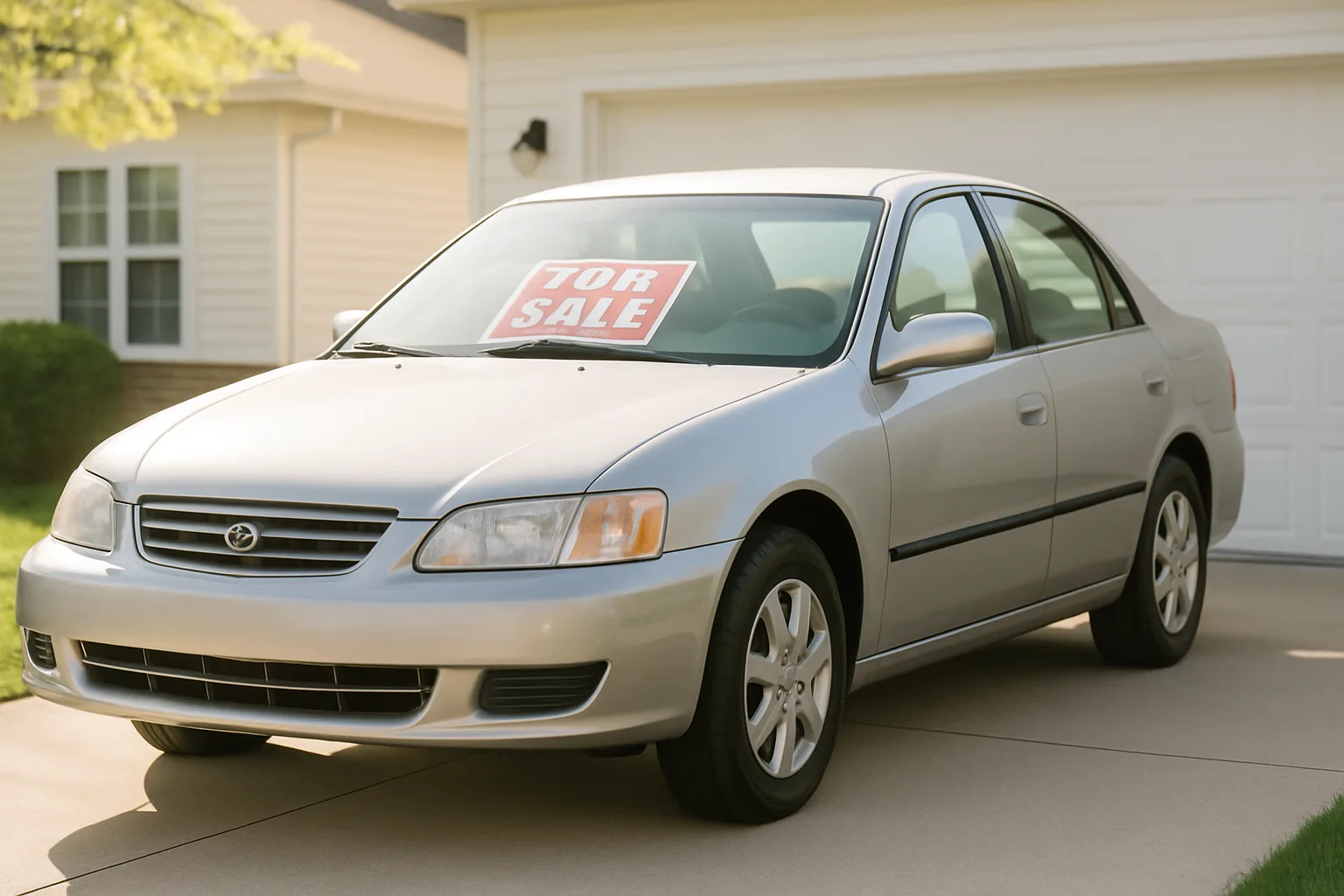
Most car owners pick the worst possible time to sell. They list in January when buyers are slow, hold through spring when demand peaks, then panic-sell in December for whatever they can get. If you've got an unwanted vehicle sitting in your driveway in Newark — whether it's a rusted-out sedan, a post-accident wreck, or an estate car you inherited last year — timing your sale around market cycles can mean real money left on the table or in your pocket. Understanding seasonal trends in junk car removal Newark gives you an edge most sellers never bother to use.
Why Seasonal Trends Matter for Scrap Car Value Today
The used car and scrap car markets don't move in a straight line. They follow predictable rhythms driven by weather, consumer behavior, steel demand, and economic cycles. Scrap car value today in July is not the same as scrap car value in February. That's not speculation — it's how commodity markets and consumer demand have historically worked, and 2026 is no exception.
Steel mills and metal recyclers drive the floor price of any scrap vehicle. When industrial demand for recycled steel rises — typically in spring and fall construction cycles — scrap prices follow. Non-ferrous metals like copper and aluminum, which show up in wiring, radiators, and trim, also fluctuate with global manufacturing demand. For a Newark yard owner or a private seller trying to get cash for cars New Jersey, these swings matter.
- Steel demand typically peaks: March–May and September–October
- Consumer used car demand peaks: February–April (tax refund season) and late summer
- Slowest periods: January and mid-December
- Scrap metal spot prices: Volatile year-round, tied to energy costs and global manufacturing
This matters whether your vehicle has parts value, driveable resale value, or is heading straight to a crusher. The more you understand the cycle, the better positioned you are to get a free car valuation at the right moment — not just whenever it becomes convenient.
Spring and Summer: The Best Windows for Junk Car Removal in Newark
Spring is the single strongest window for selling an unwanted or end-of-life vehicle in most North American markets, and Newark is no different. Tax refund season drives consumer demand for affordable used cars hard from late February through April. Buyers who would never look at a damaged or salvage-title vehicle in November suddenly become interested in project cars, parts donors, and cheap daily drivers when they have a $2,000–$4,000 refund in hand.
For sellers, this creates a real opportunity. A vehicle that might only attract scrap value in January — because the only buyer is a yard paying by the ton — suddenly attracts multiple buyers in March who want parts, want to flip it, or want a cheap car. More buyers means better price discovery. That's not a slogan, that's how markets work. If you're sitting on a post-accident vehicle, an uninsured car, or a car no inspection shop will touch, March and April are your months.
Summer extends the window, though the dynamic shifts slightly:
- Demand for trucks, SUVs, and utility vehicles rises with construction and moving season
- College students and recent graduates enter the used car market in June–August
- Parts demand stays strong as people repair existing vehicles rather than buy new
- Scrap metal markets stay active through Q3 if industrial output holds
Right now, in July 2026, you're still inside a strong selling window. If you have a car to move in Newark, don't wait for fall assuming prices will hold — they may not.
Fall Slowdowns and What They Mean for Cash for Cars in New Jersey
September can still be decent for scrap car sellers, particularly in the first few weeks when construction and manufacturing activity remains high. But October marks a shift. Consumer used car demand drops as people stop buying ahead of winter. Parts buyers get more selective. Scrap yards in New Jersey start getting cautious about inventory heading into the slow months.
For sellers, this means the leverage you had in April — where multiple buyers might compete for your vehicle — starts to fade. The seller who held a non-running 2014 Chevy Silverado through summer hoping prices would spike further often ends up selling it in November for less than they'd have gotten in March. Patience has a cost in this market.
That said, fall isn't a dead zone. There are still motivated buyers. Dealers do end-of-year restocking. Scrap demand can briefly surge in October if construction projects rush to finish before winter. The key is not assuming fall will be as active as spring, and pricing accordingly rather than holding out.
Winter: The Hardest Time to Sell a Scrap or Junk Car
January is brutal. February is only slightly better. If you're trying to do junk car removal in Newark between December 15 and February 15, you're operating in the weakest demand window of the year. Scrap yards are working through inventory backlogs. Consumer buyers aren't looking. Driveway sellers are competing with each other for a shrinking pool of buyers.
This is the season where sellers lose the most money. They're often in a rush — handling an estate vehicle, trying to get rid of a car before the new year, or just fed up with paying insurance on something they don't drive. Urgency plus weak demand equals low offers. If you can hold until February, the tax refund market starts warming up faster than most sellers expect.
If you can't wait — and sometimes you genuinely can't — the best move is to create competition among buyers rather than accepting the first offer. Platforms like SMASH connect you with multiple vetted buyers across the U.S., so even in a slow market you're not just taking the single number your local yard throws out. Connect with trusted auto buyers in the USA through SMASH Cars and see what competitive offers actually look like, even in a down window.
How to Use a Scrap Car Value Calculator Alongside Market Timing
A scrap car value calculator gives you a baseline — what the vehicle is worth by weight at current metal prices. That number is your floor, not your ceiling. A running 2010 Honda Accord doesn't sell for scrap weight. Neither does a truck with a good engine, a vehicle with a salvage title that still drives, or an estate car with low miles and a clean body. The calculator tells you the worst-case number. Real buyers often pay more.
Understanding the seasonal context helps you interpret that calculator output correctly. If scrap prices are soft in January and your calculator shows $450, that's your absolute floor in the weakest market of the year. The same vehicle in April, with consumer demand up and parts buyers active, might attract $900–$1,400 depending on condition, make, and what parts are still intact. That's not guaranteed — markets shift — but the seasonal context changes how you negotiate.
For a more complete picture on how to approach this, browse car selling tips on our blog — there's practical guidance on how to document your vehicle, understand what buyers are actually looking for, and avoid the most common mistakes sellers make when they're in a hurry.
Also worth noting: if your vehicle is truly end-of-life with no parts value, and you need it gone fast, options like free junk car removal from GetMyScrapCar can handle the pickup without the hassle of coordinating separately.
Newark Sellers: What Local Market Conditions Look Like in Mid-2026
Newark sits in one of the most active used vehicle markets in the northeastern United States. The density of the market — the number of yards, dealers, parts buyers, and private buyers within a short radius — means that competition for vehicles is generally stronger here than in rural markets. That's a structural advantage for sellers.
In July 2026, the northeastern used vehicle market remains active. Parts demand is strong. Scrap metal prices have been volatile through Q1 and Q2, as they typically are in any active commodity cycle, but industrial demand has kept the floor relatively firm. New Jersey sellers right now are in a reasonable position — not the peak of spring, but still inside a competitive window before fall softening begins.
If you're sitting on a vehicle — whether it came from an accident, an upgrade, an estate, or you just stopped driving it — right now is a sensible time to move it. Waiting for a perfect moment is how sellers end up holding a depreciating asset into a slower market. Newark's local buyer density means you have options. Use them.
You can also explore our Newark scrap metal services page for location-specific information on how SMASH connects sellers in this market with vetted buyers.
When you're ready to see what your vehicle is actually worth in today's market, SMASH makes it straightforward. No subscription, no guessing, no single buyer setting your price in a vacuum. Get your free offer at smash-cars.com and find out what real competition looks like for your car.
Frequently Asked Questions
Q: What is the best time of year to do junk car removal in Newark?
Spring — specifically late February through April — is historically the strongest window. Tax refund season drives consumer demand, parts buyers are active, and scrap metal prices often firm up with construction season. If you can align your sale with this window, you'll have more buyers and more leverage.
Q: How do I know if my car is worth more than scrap value in New Jersey?
Start with a scrap value baseline using weight and current metal prices, then compare what buyers will actually offer. If your vehicle runs, has a good engine, low miles, or intact parts, it almost certainly has value above scrap weight. Platforms like SMASH surface that by creating competition among multiple buyers rather than letting one yard set the price.
Q: Can I sell a car with no insurance or registration in Newark?
Yes. Many buyers — including scrap yards, salvage buyers, and platforms like SMASH — purchase vehicles regardless of current registration or insurance status. You'll typically need to provide proof of ownership (title or equivalent documentation), but active insurance is not a requirement to sell a scrap or junk car.
Q: Do scrap car prices in Newark follow national trends or local ones?
Both. National scrap metal commodity prices set the floor, and Newark's local market conditions — buyer density, yard competition, regional demand — affect how far above that floor sellers can go. Newark's position in a high-density northeastern market generally works in sellers' favor compared to more rural regions.
Q: How fast can I get cash for a junk car in Newark, New Jersey?
Many buyers can complete a transaction within 24–48 hours once an offer is accepted, including pickup and payment. The speed depends on having your title ready and confirming vehicle condition upfront. Using a platform that pre-vets buyers — like SMASH — reduces the risk of last-minute lowball adjustments at pickup.
Follow SMASH on LinkedIn for industry updates, scrap metal market insights, and practical tips for sellers across North America.