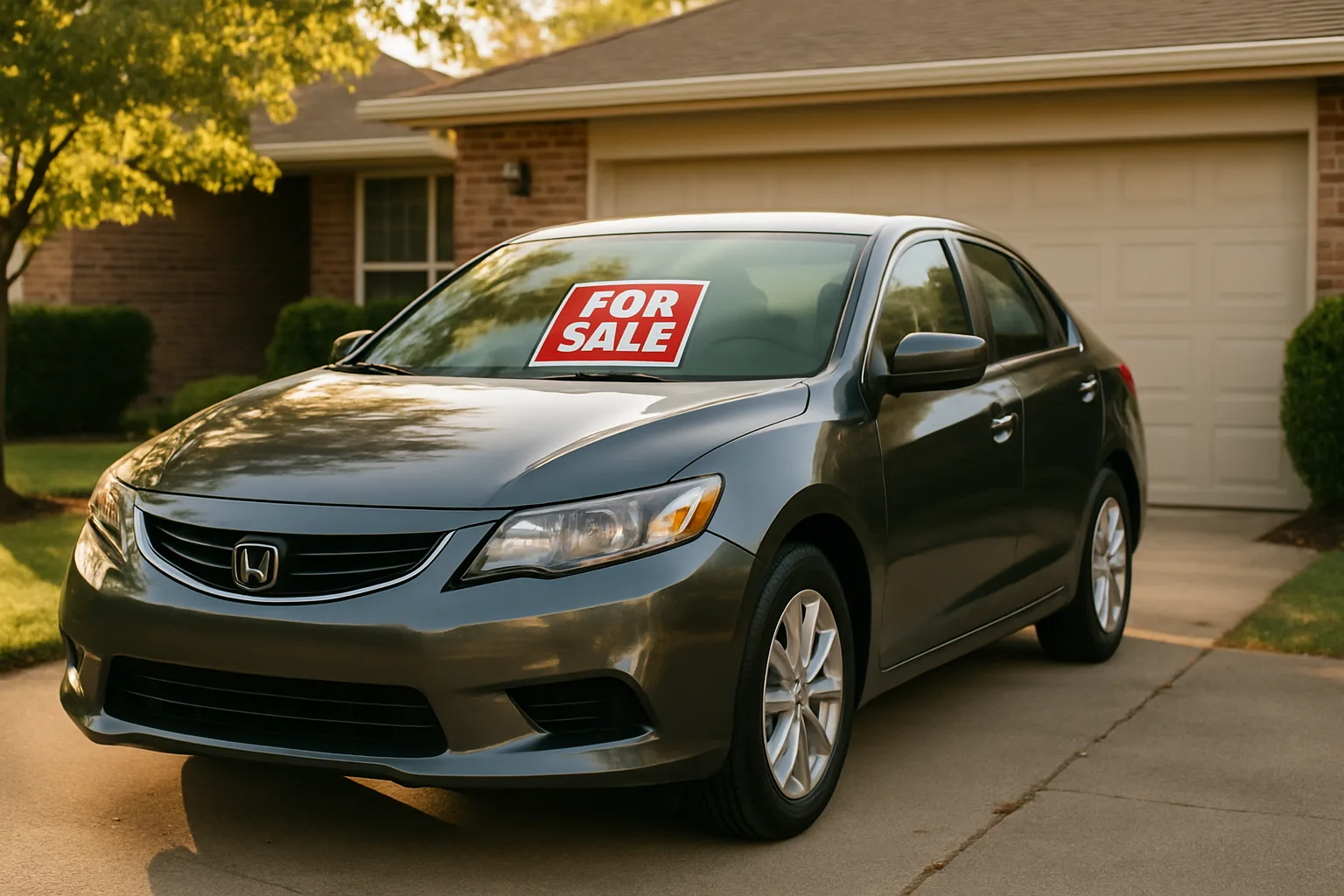
Most car sellers in the United States leave money on the table — not because their car isn't worth more, but because they don't know how to position it. Whether you're dealing with a dented daily driver, a storm-damaged SUV sitting in a Florida driveway, or an inherited vehicle you've never even started, how you sell matters as much as what you're selling. If you want to sell my car fast Orlando and actually walk away satisfied, you need a plan — not a prayer.
This guide cuts through the noise. No recycled advice. No "clean your car and take good photos" fluff. Real, practical steps that help you extract actual value from a vehicle that might seem worthless at first glance.
Know What Your Car Is Actually Worth Before You Accept Anything
The first mistake most sellers make is letting the buyer set the price. You call a yard, they throw out a number, and you either take it or hang up — with no real idea whether that number is fair. That's not negotiation. That's guessing with someone else's advantage.
Before you contact anyone, gather your car's specs: year, make, model, mileage, condition (running or not), and title status. A car with a clean title is worth more than one with a salvage title — sometimes significantly. A running vehicle with a blown head gasket still has more recoverable value than a crushed shell. Understanding these distinctions helps you frame the conversation.
Here's what drives junk car prices in 2026:
- Scrap metal market rates — steel, aluminum, and copper prices fluctuate with global demand
- Catalytic converter content — vehicles with high-PGM cats (platinum group metals) fetch more
- Working parts — engines, transmissions, and airbag modules add resale value
- Vehicle weight — heavier vehicles yield more at the scale
- Title status — clean titles open up more buyer pools
- Local demand — certain makes and models are harder to find parts for in your region
You can get a free car valuation through SMASH to understand where your vehicle actually sits in the current market. That number becomes your floor — not your ceiling.
Why Location Matters: Selling a Junk Car in Orlando and Across Florida
Geography isn't just a detail — it shapes your offer. In a dense metro like Orlando, you have more buyers competing for your vehicle than in a rural county. More buyers mean more competition. More competition means better price discovery. That's not theory — that's how markets work.
Florida's climate creates its own dynamics. Heat and humidity accelerate rust on undercarriages and body panels, but they also mean a steady flow of storm-damaged and flood-affected vehicles entering the market. Buyers in the Orlando area are experienced with this inventory. They know how to evaluate it, and they're actively bidding on it.
If you're trying to sell my car fast in Orlando, you're not competing in a thin market. You're in one of the most active used and salvage vehicle markets in the southeastern United States. Use that to your advantage. Don't accept the first offer. Get multiple quotes, even if the process feels tedious — the difference between offer one and offer three can be meaningful.
For sellers dealing with inherited vehicles or estate situations — common in Florida, where retirees often leave behind multiple vehicles — the urgency to close quickly can cost you real money. Take a breath. A few extra days of comparison shopping can add hundreds to your final number. If you're handling an estate vehicle or need help navigating the process, you can also browse car selling tips on our blog for practical guidance on title transfers and paperwork.
Cash for Junk Cars Orlando: How to Get More Than the Scrap Rate
Here's the truth about cash for junk cars Orlando offers: most of them are calculated at or near scrap metal value. The buyer assumes you don't know about the catalytic converter, the working alternator, or the transmission that still has life in it. Their opening offer reflects that assumption.
Getting above scrap value requires two things: documentation and competition.
Documentation means showing up to the conversation prepared. Photos of your vehicle from multiple angles. A clear record of what works and what doesn't. If the AC compressor runs, say so. If the tires are new, note that. Buyers on platforms like SMASH use photo documentation and condition notes to refine their bids — and a well-documented car typically generates stronger offers than a vague listing.
Competition is the bigger lever. A single buyer has no incentive to improve their offer. Two buyers competing for the same car changes the dynamic immediately. An auction-style approach — where multiple vetted buyers see your vehicle and submit bids — applies real market pressure. That's not a gimmick. That's how price discovery works in every other commodity market, including scrap metal.
SMASH connects sellers with vetted buyers across the United States. No subscription fees. No upfront costs. You only pay attention when competitive offers come in. If you're in Orlando or anywhere across Florida and want to test what your car is actually worth to multiple buyers, connect with trusted auto buyers in the USA through SMASH Cars to start the process.
What About Cars Without Insurance, Titles, or Inspection?
This is where a lot of sellers get stuck. They assume a car with a missing title, a lapse in insurance, or an expired registration is unsellable — or at least only sellable for rock-bottom scrap prices. That's often not true.
Here's how to handle common situations:
- No title: Most states allow you to apply for a duplicate title through your DMV. In Florida, this process is straightforward and typically takes under two weeks. Some buyers will also accept a bill of sale for vehicles over a certain age — check your state's rules.
- No insurance: You don't need active insurance to sell a car. You do need to notify your insurer once the sale is complete to cancel coverage. Don't let a lapse in insurance stop you from getting quotes.
- Salvage or rebuilt title: These vehicles sell every day. A salvage title reduces value, but it doesn't eliminate it. Be upfront about the title status — buyers price it in, and honesty builds trust that keeps the deal moving.
- No inspection: Junk and salvage buyers don't need an inspection. They're buying based on condition, parts value, and scrap weight. You don't need to pass a state inspection to sell to a recycler or salvage buyer.
- After an accident: Even a car that drove into a tree has recoverable value. Engines, transmissions, electronics, and body panels all have secondary markets. Don't assume total loss means zero value.
If the vehicle is truly end-of-life and you want it gone without navigating the selling process at all, free junk car removal from GetMyScrapCar is worth a look — quick pickup, no hassle.
Timing, Paperwork, and Getting Paid Fast
Speed matters — but not at the cost of getting paid properly. Here's how to move fast without making mistakes that haunt you later.
Paperwork checklist before you sell:
- Vehicle title (or duplicate title application in progress)
- Government-issued photo ID
- Bill of sale (your state may have a standard form)
- Any lien release documentation if there was a loan on the vehicle
- Odometer disclosure for vehicles under 10 years old (federal requirement)
Once you have your paperwork in order, the transaction moves faster. Buyers who receive complete documentation can process payment quickly — same-day in many cases. If you're working through a platform with auto-invoicing built in, the paperwork bottleneck disappears almost entirely.
Payment methods to accept: Bank transfer, certified check, or e-transfer are all legitimate. Avoid cash-only buyers who can't provide a receipt. If something feels rushed or the offer suddenly drops at pickup, walk away. Legitimate buyers don't use pressure tactics.
On timing: scrap metal prices fluctuate. If metal markets are up, your car is worth more to a recycler. If markets are soft, parts value becomes more important. Checking the market before you sell — even just a general sense of whether steel prices are trending up or down — gives you context for evaluating offers. Disclaimer: Metal prices change daily based on global market conditions. Always verify current rates before making selling decisions.
The SMASH Approach: Competition Changes Everything
The old way of selling a junk car goes like this: you call one buyer, they lowball you, you either accept or make another call. It's slow, opaque, and tilted in the buyer's favor from the start.
SMASH flips that dynamic. You document your vehicle — photos, condition notes, title status, VIN — and vetted buyers compete for it. No subscription fees. No hidden costs. The platform runs on a simple principle: we only win when you win.
For sellers across Florida — Orlando, Tampa, Jacksonville, Miami — this means real competition from real buyers who are actively looking for inventory. Not a single buyer with a take-it-or-leave-it number. A market.
Whether your car runs or doesn't, has a clean title or a salvage one, is a 2012 Honda Accord or a 2004 F-150 with a cracked block — the right buyer exists. The goal is making sure they're competing for your vehicle, not just the first one who picks up the phone.
If you're ready to stop guessing and start selling, get connected with trusted auto buyers in the United States through SMASH — your free offer is waiting at smash-cars.com.
Frequently Asked Questions
Q: How fast can I sell my car in Orlando, Florida?
In most cases, you can receive offers within 24–48 hours and complete the transaction within a few days. If your paperwork is ready and your vehicle is documented clearly, same-day or next-day pickup is realistic with the right buyer. Orlando's active salvage market means buyers move quickly.
Q: What's the best way to get cash for junk cars in Orlando?
The best approach is to get multiple competing offers rather than accepting the first quote. Platforms like SMASH connect you with vetted buyers across Florida and the United States who bid competitively for your vehicle. More competition means better price discovery — simple as that.
Q: Can I sell my car in Florida without a title?
You can apply for a duplicate title through the Florida Department of Highway Safety and Motor Vehicles (DHSMV). The process is typically quick and straightforward. Some buyers will also work with a bill of sale for older vehicles — confirm the buyer's requirements before you proceed.
Q: Does it matter if my car doesn't run when selling for scrap?
No — non-running vehicles sell every day. Buyers factor in towing costs and adjust their offer accordingly, but a non-running car still has value in its parts, catalytic converter, and scrap metal weight. Document its condition honestly and let buyers price it competitively.
Q: How do junk car prices in 2026 compare to scrap metal rates?
Junk car prices are influenced by scrap metal rates, but they're not identical. A car with valuable parts — a working engine, a high-PGM catalytic converter, usable body panels — can sell for meaningfully more than its raw scrap weight suggests. Understanding what your specific vehicle offers helps you negotiate from a stronger position. Note: Prices fluctuate with market conditions — check current rates before selling.
Follow SMASH on LinkedIn for industry updates, scrap market insights, and tips for getting more from your next sale: linkedin.com/company/scrap-metal-auction-sales-hub.
```