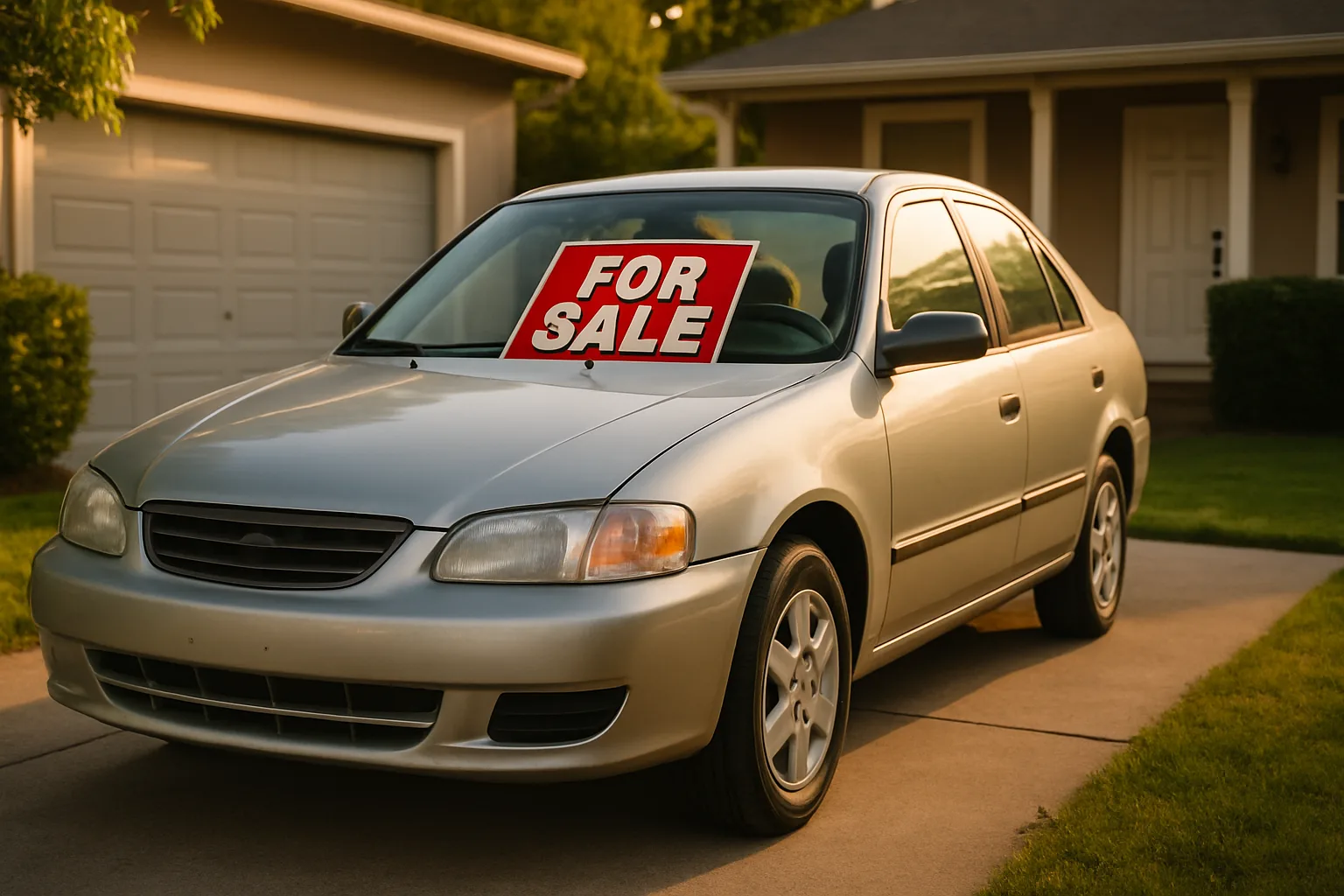
You've got a car sitting in your driveway that you don't want anymore. Maybe it was in a fender-bender. Maybe it's been off the road for two years. Maybe you just inherited it and have no idea what it's worth. The question isn't just "how do I get rid of it" — it's "how do I get the most for it?" That decision — scrap it, sell it privately, or trade it in — is worth more than most people think. Especially in a market like Miami, where demand for used vehicles, salvage parts, and non-ferrous metals all converge. If you're searching for junk car buyers near me Miami, you need to know which path actually makes sense for your specific situation before you make a move.
The Three Paths — and Why Most People Choose the Wrong One
Let's be direct. Most car owners in Miami leave money on the table because they default to the easiest option, not the best one. They take whatever the dealership offers on trade-in. They call one junkyard. They donate the car without knowing its actual market value. Each of those choices can be right — but only under the right conditions.
Here's how to think about the three options:
- Scrapping — You sell the vehicle (or its materials) based on metal weight and salvageable parts. This is your floor price. It's the baseline, not the default.
- Selling privately or through a buyer network — You find a buyer who values the car as a whole unit, not just its weight in steel. This is often where you recover the most value — especially on running vehicles, salvage titles, or cars with desirable parts.
- Trading in — Fast, convenient, but almost never the highest-value option. Dealerships price in their own margin. You're paying for their convenience.
The right choice depends on the condition of your vehicle, the title situation, and whether you have time to wait or need cash for cars Miami same-day. Let's break it down by scenario.
When Scrapping Actually Makes Sense — and When It Doesn't
Scrapping makes sense when a vehicle has reached the end of its useful life. We're talking about a car that won't pass inspection, has a blown engine, has significant rust or flood damage, or costs more to repair than it's worth. In those cases, you're not selling a car — you're selling raw materials. Steel, aluminum, copper wiring, and catalytic converters all carry real value at the yard.
The catalytic converter alone on some vehicles can be worth hundreds of dollars due to the platinum-group metals inside. If your car has a high-value cat — certain Honda, Toyota, or Ford models — that component alone may be worth pursuing separately through a catalytic converter auction rather than lumping it into a flat junk car quote. Platforms like SMASH connect sellers with vetted buyers who compete for those components, which means better price discovery than a single-buyer phone call.
But here's where people make mistakes: they assume every unwanted car should go straight to the scrap yard. That's not true. A car with a salvage title, a vehicle with mechanical issues but a solid body, or a car with low mileage and a clean interior — those have buyers who will pay above scrap. Before you call a junkyard, find out what your car is actually worth on the open market.
How to Know If Your Car Is Worth More Than Scrap Value
This is the core question. And the honest answer is: you won't know until you get multiple offers. A salvage title doesn't automatically mean a car is worthless. A non-running vehicle isn't automatically a scrap car. Context matters.
Ask yourself these questions:
- Does the engine run? Even rough runners can attract buyers who flip or repair vehicles.
- What's the mileage? A high-mileage car with a damaged body might still have a market for parts buyers.
- Is there a clean title? Clean titles always command a premium over salvage titles — but knowing your salvage title car worth helps you set a realistic floor.
- What year, make, and model? Certain vehicles hold parts value far longer than others. Popular models in Miami — where cars run year-round in hot, humid conditions — often have strong local demand for A/C components, transmissions, and electrical systems.
- Are there any valuable components intact? Catalytic converter, infotainment system, newer tires, aftermarket parts — these all add up.
If you can answer yes to more than one of those, you're likely looking at a car worth more than its scrap weight. That's when you stop calling junkyards and start talking to buyer networks that can expose your vehicle to competitive offers. You can get a free car valuation through SMASH Cars and find out what the market will actually pay — not just what one buyer decides on the spot.
Trade-In: When It's Right and When It's Robbery
Trade-ins exist for one reason: convenience. You walk in with an old car, walk out with credit toward a new one. No private sale hassle, no waiting for buyers, no paperwork headaches. That convenience is real, and for some sellers it's worth it.
But let's be honest about the math. Dealerships build in margin on every trade-in. The offer you get reflects what they think they can wholesale or retail the car for — minus their profit. On a damaged vehicle, a salvage title car, or anything older than 10 years, that trade-in offer is often well below what a competitive buyer market would pay.
In Florida, private buyers and salvage auctions are active markets. Miami especially has a robust network of independent dealers, export buyers, and parts businesses that compete for vehicles that dealerships won't touch. If your car is in rough shape, a dealership trade-in quote is almost certainly not your best option. It's worth one phone call or online inquiry to compare before you sign anything over.
If speed matters more than price — you need the car gone today, you don't have the bandwidth to manage inquiries, or you're dealing with an estate situation — then trade-in or junk car removal services make sense. Platforms offering free junk car removal from GetMyScrapCar can move your vehicle quickly without the back-and-forth of a private sale. That's a real solution for people who value time over extracting every last dollar.
The Miami Market: Why Location Affects What You Should Do
Miami isn't just a hot market in terms of temperature. It's a high-turnover vehicle market. Tourists, seasonal residents, a massive import/export industry through the Port of Miami, and a dense urban population mean that buyers for vehicles of all conditions exist here year-round. That works in your favor.
Vehicles in Miami also tend to have specific damage profiles — flood damage from heavy rain seasons, salt-air corrosion from proximity to the coast, and high AC usage that wears specific components faster. Buyers in this market know that. They've priced it in. You don't need to apologize for your car's condition — you need to reach the right buyer who has priced that reality fairly.
If you're working through Miami scrap metal services, you're already in a market with strong buyer competition. That competition is your advantage. One call to one buyer eliminates that advantage entirely. Use it.
Whether you're dealing with a written-off vehicle, a post-accident car, an uninsured vehicle you can't legally drive, or an inherited car from an estate, the Miami market has buyers for it. The question is finding them efficiently — and that's exactly where connecting with trusted auto buyers in the USA through SMASH Cars makes the process work for you instead of against you.
What to Do Before You Contact Any Buyer
Before you reach out to anyone — junkyard, dealer, private buyer, or platform — do three things:
- Know your title status. Clean, salvage, rebuilt, or lien — each affects your options and your price. Get clarity on this before you start the conversation.
- Document the condition honestly. Take photos. Know what works and what doesn't. Buyers will ask, and having the answers ready moves the process faster and signals you're serious.
- Get at least two offers. One offer is a guess. Two offers are a market. Three offers are a data point you can negotiate with. Never accept the first number without knowing what the second looks like.
If you want broader context on how to navigate the process from start to finish, browse car selling tips on our blog for practical guidance on everything from paperwork to maximizing what you get for specific vehicle types.
Selling a car you don't want shouldn't feel like a loss. With the right approach — matching your vehicle's actual condition to the right type of buyer — you get more than the floor price. You get what the market will actually pay.
If you're in Florida and ready to find out what your vehicle is worth, don't guess and don't settle. SMASH connects sellers with buyers who compete for the vehicle, not buyers who make a single take-it-or-leave-it offer. Get your free offer at smash-cars.com and find out what the market says your car is worth today.
Frequently Asked Questions
Q: How do I find junk car buyers near me in Miami?
Start with platforms that connect you to multiple vetted buyers rather than a single junkyard. In Miami, buyer competition is strong — use that to your advantage. SMASH Cars helps you reach buyers across the USA who bid competitively for your vehicle, regardless of condition.
Q: What's the difference between scrap value and market value for a junk car?
Scrap value is based on the vehicle's metal weight and basic salvageable parts. Market value accounts for the car as a whole — running condition, model desirability, parts demand, and title status. Many cars sell for significantly more than scrap value when exposed to the right buyers.
Q: Can I sell a car with a salvage title in Florida?
Yes. Florida allows the sale of salvage title vehicles, though the buyer pool is different from clean-title cars. Salvage buyers — including rebuilders, parts dealers, and export buyers — are active in the Miami market. Your price will reflect the title status, but that doesn't mean you can't get a fair offer.
Q: How much is my car worth for cash for cars in Miami?
It depends on the year, make, model, mileage, condition, and title status. There's no single answer, and any buyer who quotes a price without asking those questions isn't giving you a real number. Get a proper valuation that accounts for your specific vehicle before accepting any offer.
Q: Do I need insurance to sell my car in Florida?
You don't need active insurance to sell a vehicle in Florida. You do need to cancel your insurance after the sale is complete and transfer the title to the buyer. If the car isn't driveable, most reputable buyers will arrange pickup — so the lack of insurance doesn't prevent you from selling.
Follow SMASH on LinkedIn for industry updates, scrap market insights, and tips on getting more for your vehicle.