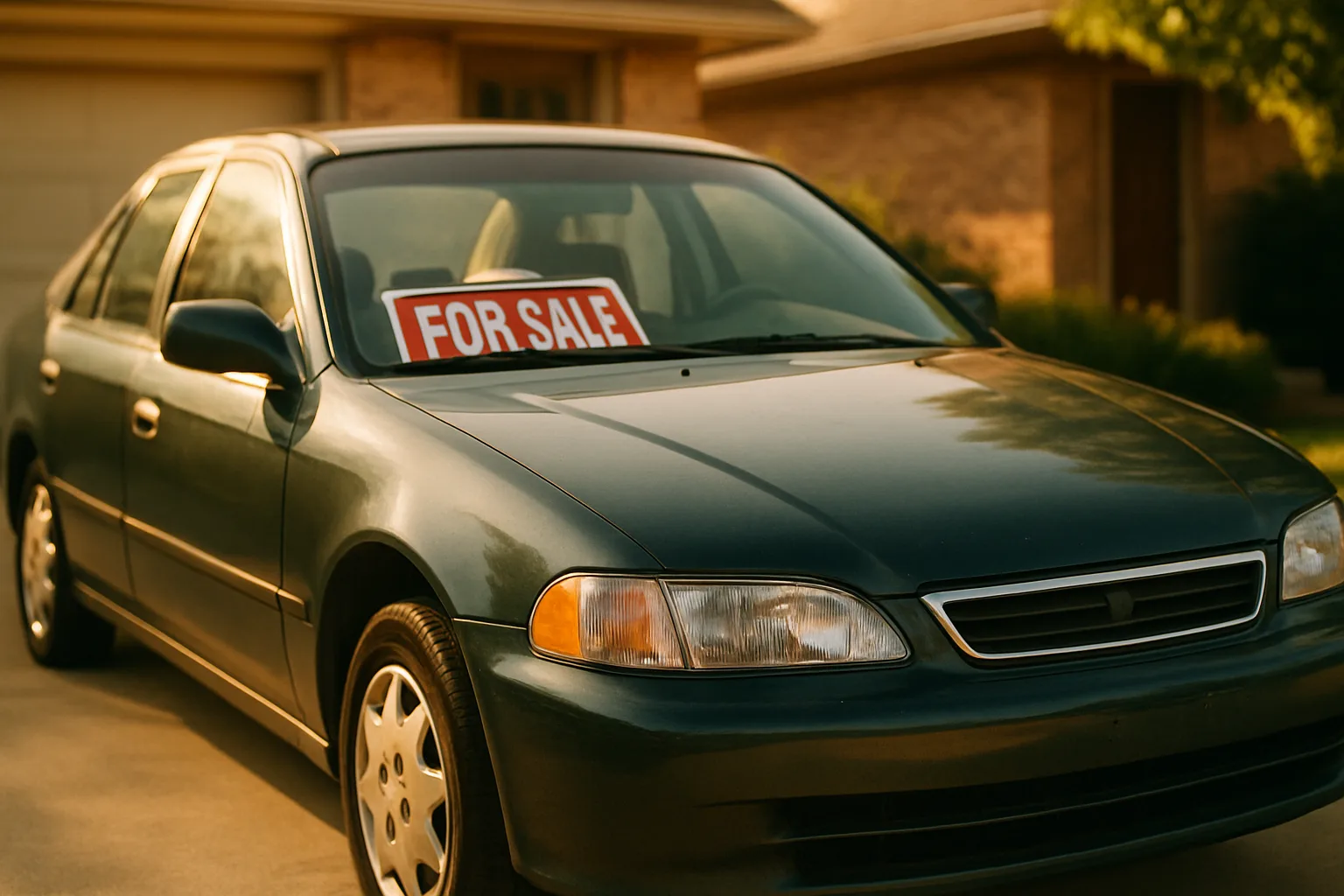
What Buyers Actually Look At When They Price Your Scrap Car in 2026
Most car owners leave money on the table — not because their vehicle is worthless, but because they don't know what buyers are actually evaluating. If you're trying to understand your scrap car value today, the answer isn't a single number. It's a combination of factors that shift with the market, the vehicle, and who's doing the buying.
This matters whether you're in Detroit clearing a driveway after an estate sale, or anywhere across Michigan trying to get rid of a car that stopped running two years ago. The more you understand how buyers think, the better position you're in to get a fair offer — or push back on a low one.
The Foundation: Scrap Weight vs. Parts Value
Every buyer starts in the same place: what is this vehicle worth at its lowest possible baseline? That baseline is scrap weight. A typical passenger car weighs between 3,000 and 4,000 pounds, and a significant portion of that is steel. Steel prices fluctuate constantly, so the scrap floor of your car moves with the commodity market.
But scrap weight is just the floor, not the ceiling. Buyers with the right network — or platforms that connect sellers to competitive buyers — will look past the raw metal and ask: what else is here? A working engine, intact catalytic converters (cats), functioning transmission, low-mileage wheels, and undamaged body panels all push the value above pure scrap. That gap between scrap floor and parts value is exactly where you should be negotiating.
- Scrap steel price per ton — fluctuates daily; check current rates before accepting any offer
- Catalytic converter value — precious metals inside (platinum, palladium, rhodium) can add significant value
- Working drivetrain components — engines and transmissions in running condition attract higher bids
- Aluminum content — wheels, engine blocks, and radiators contain higher-value non-ferrous metal
- Intact interior and electronics — airbags, infotainment systems, and sensors have resale value in late-model vehicles
The bottom line: a car that gets treated purely as scrap metal is almost never getting its full value. Get a free car valuation before you accept a flat scrap-rate offer — you might be surprised what's actually on the table.
What Condition Really Means to a Buyer
Buyers use "condition" as a quick way to bracket a vehicle. But condition doesn't just mean whether it runs. It means whether the parts are salvageable, whether the frame is intact, and whether there are hazmat concerns that add cost to removal and processing.
Here's how buyers typically break it down:
- Running and driveable — highest value tier; more buyer interest, more competition, better price discovery
- Non-running but complete — still strong value if key components are undamaged; towing required, but buyers expect that
- Accident-damaged — value depends on which end took the hit; rear-end damage often leaves the drivetrain intact, front-end damage can total it
- Stripped or parted out — lower value; the most valuable components are already gone
- Fire or flood damage — significant value reduction; electrical systems and interiors are compromised, and some buyers won't touch these at all
If you're trying to sell a damaged car or a written-off vehicle after an accident, don't assume it's only worth scrap. Even heavily damaged late-model vehicles carry parts that are in demand. Document what's still intact — photos help — and let buyers compete rather than accepting the first offer.
Detroit yards and Michigan buyers in particular see a high volume of winter-damaged vehicles, and they know how to price rust and frame corrosion. If your car has Michigan winters on it, be upfront about it. Experienced buyers factor that in anyway, and transparency builds trust faster.
Year, Make, Model — and Why Some Cars Are Worth More Dead Than Alive
The year, make, and model of your vehicle affects value in two ways: parts demand and metal composition. A 2018 Ford F-150 has a high-demand aluminum-intensive body structure — that non-ferrous content is worth more per pound than steel. A 2009 Honda Accord has an enormous pool of buyers looking for used parts because those engines run forever and the parts market is massive.
Some vehicles are genuinely worth more parted out than sold whole. Trucks, SUVs, and diesel vehicles often fall into this category. Catalytic converter values on certain hybrid and luxury models can be surprisingly high — and a single cat on some vehicles can represent a significant portion of the car's total value. If you're trying to figure out how much is my car scrap value, the make and model is one of the first things any serious buyer will ask.
VIN lookup tools are standard in serious scrap and salvage operations now. Buyers use VIN data to confirm the vehicle's specs, check for open recalls, and verify whether the catalytic converter type matches what's visible under the car. If you're working with a buyer who doesn't ask for the VIN, that's a flag — they may be lowballing without doing the work.
How Competition Changes the Number You Walk Away With
This is where most private sellers get hurt. You call one buyer, they give you a number, you take it. There's no reference point, no counter-offer, and no way to know if the number was fair. That's the old way — and it benefits the buyer every time.
Competition changes the math. When multiple vetted buyers are looking at the same vehicle at the same time, price discovery actually happens. Buyers can't lowball when they know someone else is bidding. That's the core logic behind auction-style platforms for scrap and salvage vehicles.
Platforms like SMASH bring that same competitive dynamic to vehicle sellers. Instead of one cold call and a gut-check number, you get documented inventory, multiple buyers, and a transparent process. Connect with trusted auto buyers in the USA through SMASH Cars and see what competitive bidding actually looks like for your vehicle.
If you're in Detroit or anywhere across Michigan and want to sell scrap car Detroit for more than a single buyer will offer, the move is simple: don't stop at the first quote. The market will tell you more than any single buyer will.
Documentation and Why It Affects Your Offer
Buyers price risk. If they can't confirm what they're buying, they build a discount into the offer to protect themselves. That discount comes out of your pocket.
Clear documentation removes that risk and, in turn, removes the discount. What helps:
- Clean or salvage title — buyers need proof of ownership; no title often means a lower offer or no offer at all
- Vehicle identification number (VIN) — confirms specs and history
- Photos of the vehicle — especially the undercarriage, engine bay, and any damage
- Service records or odometer disclosure — adds credibility to mileage claims
- Original parts still in place — confirm that cats, wheels, and battery haven't been removed
If you're handling an inherited car or an estate vehicle, title transfer in Michigan has specific steps. You'll need the death certificate and proper estate documentation to transfer ownership. Don't let the paperwork stall your sale — most experienced buyers have seen it before and can help you navigate it. Explore scrap car removal services at GetMyScrapCar if you need guidance on the removal side of the process.
Scrap metal inventory management at the yard level has gotten more rigorous in 2026. Buyers are tracking serial numbers, documenting cats by model, and using photo verification to protect against theft-related liability. That's good news for legitimate sellers — it means the buyers worth working with are doing their homework, and documented vehicles move faster.
Timing the Market and Getting the Most from Your Scrap Car Value Today
Scrap metal prices aren't static. Steel, aluminum, copper, and precious metals in catalytic converters all move with global commodity markets, manufacturing demand, and trade conditions. In 2026, supply chain dynamics continue to influence non-ferrous pricing in ways that weren't predictable even a few years ago.
You don't need to become a commodity trader to get a fair price — but you should know that timing matters. Prices for scrap steel and non-ferrous metals can vary meaningfully across a single quarter. If you're not in a rush, checking the market before you commit to a sale can pay off. If you need to sell your car fast or need free junk car removal for cash this week, prioritize speed and take the best competitive offer you can get right now.
Detroit's auto industry ecosystem means there's consistent demand for scrap vehicles across Michigan. Yards are active, buyers are competitive, and the infrastructure for fast pickup is in place. That's a favorable environment for sellers — use it. Detroit scrap metal services are well-established, and connecting with the right buyer network makes a real difference in what you walk away with.
For more practical guidance on navigating the selling process, browse car selling tips on our blog — from documentation checklists to understanding what your catalytic converter is actually worth.
When you're ready to find out what your vehicle is actually worth in today's market, don't guess — get offers. SMASH connects sellers with serious, vetted buyers across the United States. No subscription, no runaround. Get your free offer at smash-cars.com and let competition do the work.
Disclaimer: Scrap metal and vehicle prices fluctuate based on commodity markets, vehicle condition, and regional demand. Always check current rates before accepting any offer.
Frequently Asked Questions
Q: What is my scrap car value today in Detroit?
Scrap car values in Detroit depend on vehicle weight, current steel and non-ferrous metal prices, and the condition of salvageable components like the engine, transmission, and catalytic converters. Prices fluctuate with commodity markets, so the best approach is to get multiple offers rather than relying on a single quote. Use a platform that connects you to competitive buyers to find out what your specific vehicle is worth right now.
Q: Does my car have to run to be worth more than scrap value?
No. Many non-running vehicles still carry significant parts value — especially if the engine block, catalytic converters, wheels, and body panels are intact. Buyers look at what's salvageable, not just whether the car starts. A non-running late-model vehicle with intact components can be worth considerably more than its raw scrap weight suggests.
Q: How do I sell a car with a salvage title in Michigan?
You can sell a salvage title vehicle in Michigan — it just needs to be disclosed upfront. Serious scrap and salvage buyers deal with salvage titles regularly and price accordingly. Make sure you have the title in hand and that the name on the title matches your ID. If you're selling an inherited or estate vehicle, you'll need additional documentation to transfer ownership legally.
Q: What's the fastest way to sell my junk car in Detroit?
Get your documentation ready — title, VIN, and photos of the vehicle — and connect with a buyer network rather than calling individual yards one at a time. Same-day or next-day pickup is common for straightforward vehicles in the Detroit area when buyers can verify basic details quickly. Competitive platforms that surface multiple offers tend to move faster than the single-call approach.
Q: How much does a catalytic converter add to my scrap car value?
It depends heavily on the make and model of your vehicle. Catalytic converters contain platinum, palladium, and rhodium — all precious metals with prices tied to global commodity markets. On some hybrid and luxury vehicles, a single intact cat can represent a meaningful portion of the car's total value. Never remove a catalytic converter before selling — buyers want the vehicle complete, and missing components typically trigger a price reduction larger than the part's street value.
---Stay connected with the scrap metal market — follow SMASH on LinkedIn for ongoing industry updates, price movement insights, and scrap metal market news across North America.