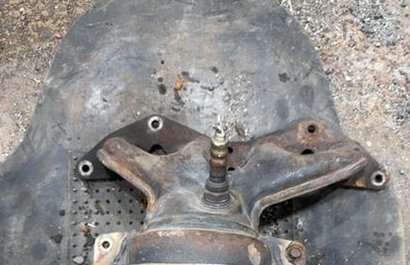
The Part Under Your Car Could Be Worth More Than the Car Itself
Most people selling a junk car think about the body, the engine, maybe the tires. Few think about the catalytic converter — a fist-sized component bolted to the exhaust system that can quietly swing your car's total value by hundreds of dollars. If you're looking at junk car removal in Nashville and you haven't thought about your cat, you're likely leaving real money on the table.
This isn't a minor detail. Catalytic converter metal prices — specifically platinum, palladium, and rhodium — are volatile commodities traded on global markets. A car sitting in your driveway today could be worth meaningfully more or less than the same car six months ago, purely because of what's inside that converter. Understanding how this works puts you in a stronger position when it's time to sell.
What's Actually Inside a Catalytic Converter
A catalytic converter reduces harmful emissions by forcing exhaust gases through a honeycomb-like ceramic substrate coated with precious metals. Those metals — platinum, palladium, and rhodium — act as catalysts. They're also among the most valuable materials by weight on earth. Rhodium, in particular, has traded at extraordinary premiums in recent years, though prices shift constantly based on industrial demand, mining supply, and global economic conditions.
The amount of precious metal inside a converter depends on the vehicle. Larger engines with bigger exhaust systems tend to carry more substrate material. Some trucks and SUVs have multiple converters. Hybrids often run smaller, cleaner engines, which means their converters don't have to work as hard — and may contain less catalyst material as a result. The make, model, year, and engine size of your car all feed directly into what a processor is willing to pay for that part.
- Platinum: Used in diesel converters; prices track industrial and jewelry demand
- Palladium: Common in gasoline-engine converters; historically very high demand from auto manufacturing
- Rhodium: Used in small amounts but commands significant premiums; extremely price-sensitive
- Vehicle type matters: Trucks, SUVs, and older V8 vehicles often have more converter material than compact cars
When scrap buyers quote you a price for a junk car, a meaningful portion of that quote reflects the converter value. A buyer who knows the metal content of your specific vehicle's converter can price accordingly. One who doesn't — or one working off a flat-rate model — may lowball you without even realizing it.
How Converter Prices Flow Downstream Into Your Scrap Car Value Today
Here's where it gets practical. Scrap car buyers aren't guessing. Sophisticated buyers use tools that cross-reference your vehicle's year, make, model, and engine against known converter grades. Each grade carries a market price tied to the precious metal spot rates on a given day. When those spot rates move, your car's value moves with them — even if the car itself hasn't changed at all.
This is one of the clearest examples of why timing matters when you sell a scrap car. A Nashville resident selling a 2009 Ford F-150 with a 5.4L V8 is sitting on a different asset than someone selling a 2015 Toyota Corolla. The truck's converter grade, combined with whatever palladium and rhodium are doing on the market that week, could produce a noticeably higher offer. That same truck six months later, with metals prices softer, might quote lower despite being the same physical vehicle.
For anyone calculating scrap car value today, a static price estimate from a generic website misses this entirely. You need a buyer who actually prices your specific vehicle — make, model, engine, trim — against live market data. That's how you get an accurate number, not a guess.
You can also get a free car valuation through SMASH, which accounts for the variables that actually drive your offer — including converter-related factors — rather than giving you a ballpark that means nothing.
Junk Car Removal Nashville: What the Local Market Looks Like
Nashville's used and junk car market is active. The metro area has grown significantly, and with more vehicles on the road comes more inventory cycling through — accidents, aged-out fleet vehicles, estate liquidations, cars coming off long-term ownership. If you're looking at junk car removal in Nashville, you're not dealing with a thin market. Buyers are competing for inventory, which works in your favor.
Tennessee doesn't have a state emissions inspection requirement statewide, though Davidson County and several surrounding counties do run emissions testing programs. That context matters for scrap sellers: a car that won't pass emissions in Davidson County isn't necessarily dead weight. Its converter, its body metal, its core components all still have value. You don't need a car to be road-legal for it to be worth a real offer through the right buyer.
What you do need is a buyer who understands the full picture. Someone offering a flat rate for any junk car in Tennessee is essentially averaging across vehicles — which means good vehicles subsidize weak ones, and sellers with converter-rich vehicles leave money behind. A buyer who breaks down your vehicle's components and prices them individually — body steel, aluminum, copper, and yes, the catalytic converter — gives you a much cleaner number.
SMASH works with vetted buyers who understand vehicle composition. Whether you're dealing with a single car from an estate, a written-off vehicle after an accident, or an uninsured car you've been meaning to move for months, connect with trusted auto buyers in the USA through SMASH Cars and get a real offer based on what your car actually contains.
Selling a Damaged or End-of-Life Vehicle for More Than Scrap Value
The phrase "scrap value" sounds like a floor — the minimum you'd accept. But a junk car isn't a single commodity. It's a collection of parts with different market values. The catalytic converter is one of the most significant, but there's also the alternator, the starter, the transmission (if it's in decent shape), the wheels and tires, the body panels if they're straight, and the raw ferrous and non-ferrous metals throughout the frame and body.
Cars that seem worthless often aren't. A car that doesn't run, has a failed transmission, and won't pass inspection still has a converter. It still has body steel. It may still have salvageable components a parts buyer wants. The mistake most sellers make is accepting the first flat quote they get — usually from a buyer who profits from not telling you what your car is actually worth.
This is especially relevant for:
- Estate vehicles: A car inherited from a family member may have sat for years but still retains significant scrap and parts value
- Post-accident vehicles: Total losses and write-offs still have recoverable value — often more than the insurance settlement implies
- Uninsured or non-running cars: No inspection needed. No insurance required. Scrap buyers don't care about roadworthiness
- High-mileage trade-in rejects: If a dealer won't take it, a scrap or salvage buyer still might pay real money for the right vehicle
- Older trucks and SUVs: Larger vehicles with bigger engines often carry more valuable converters and more raw metal
If you want to understand the full picture before you sell, browse car selling tips on our blog — there's a lot of nuance to getting a strong offer, and an informed seller almost always does better than one going in blind.
Note: All scrap metal and vehicle pricing fluctuates based on commodity markets, local demand, and vehicle condition. Always check current rates before committing to a sale.
Getting the Most Out of Your Junk Car Sale: What to Do Before You Call
You don't need to become a precious metals trader to sell your car well. But a few minutes of preparation can meaningfully improve your outcome. Before you reach out to any buyer — including through SMASH — here's what actually moves the needle.
- Know your vehicle specs. Year, make, model, engine size, and trim level. This isn't just for paperwork — it directly determines your converter grade and your total offer.
- Document what's there. If your converter is still on the vehicle, that matters. Buyers discount heavily — sometimes refuse to bid — on cars that have had the converter removed. If it's gone, disclose that upfront.
- Have your title ready. Most buyers in Nashville and across Tennessee require a clean title. If you're dealing with an estate vehicle, sort out the title transfer early — it's the single biggest delay in most sales.
- Get multiple offers. This is the whole game. A single buyer gives you a single data point. Competition between buyers is what actually reveals market value. Platforms that bring vetted buyers to your listing do this automatically.
- Don't strip the car. Removing parts before sale — including the catalytic converter — usually backfires. Buyers price complete vehicles. A partial vehicle often nets less overall, even if you sell the stripped part separately.
Sellers in other markets — including those who get free scrap car pickup across Canada — use similar principles. The fundamentals of getting a strong scrap car offer are consistent: know your vehicle, document it properly, and let buyers compete for it.
Frequently Asked Questions
Q: Does the catalytic converter really affect how much I get for my junk car in Nashville?
Yes, significantly. Catalytic converters contain platinum, palladium, and rhodium — precious metals with real commodity market prices. The converter grade for your specific vehicle can add hundreds of dollars to your offer, or reduce it if the converter is missing or damaged. Buyers who price vehicles accurately factor this in directly.
Q: How do I know if my junk car's catalytic converter is still on the vehicle?
Look underneath the vehicle along the exhaust pipe, between the engine and the muffler. It looks like a larger canister in the exhaust line. If it's been stolen or removed, there will be a visible gap or cut pipe. Disclose this to buyers upfront — most will adjust their offer accordingly, and hiding it will create problems at pickup.
Q: Can I sell my junk car in Nashville without a title?
It depends on the buyer and the situation. Some salvage buyers work with bill-of-sale transactions on older vehicles, but most legitimate buyers in Tennessee will require a clear title. If you're selling an estate vehicle, you'll need to complete the title transfer first. Contact the Tennessee Department of Revenue for guidance on title replacement or transfer if you're missing paperwork.
Q: What's the fastest way to get cash for a junk car in Tennessee?
Get your vehicle information together — year, make, model, engine — and reach out to a buyer who can quote you based on actual specs rather than a flat rate. SMASH connects sellers with vetted buyers who move quickly. Many sellers complete the process within 24 to 48 hours from first contact to pickup.
Q: Is there a scrap car value calculator I can use to estimate my offer?
General estimate tools can give you a rough range, but they rarely account for live commodity prices or your specific converter grade. The most accurate way to assess your scrap car value today is to get an actual quote from a buyer who prices by vehicle spec. Use that as your baseline, then get competing offers to see where the market actually lands.
If you're ready to find out what your car is actually worth — converter and all — SMASH makes it straightforward. No guessing, no flat-rate lowballs, no wasted calls. Get connected with trusted auto buyers in the USA through SMASH and walk away with a number that reflects your vehicle's real market value. Start at smash-cars.com.
Follow SMASH on LinkedIn for scrap metal market updates, industry news, and tips on getting the most from your next vehicle sale.