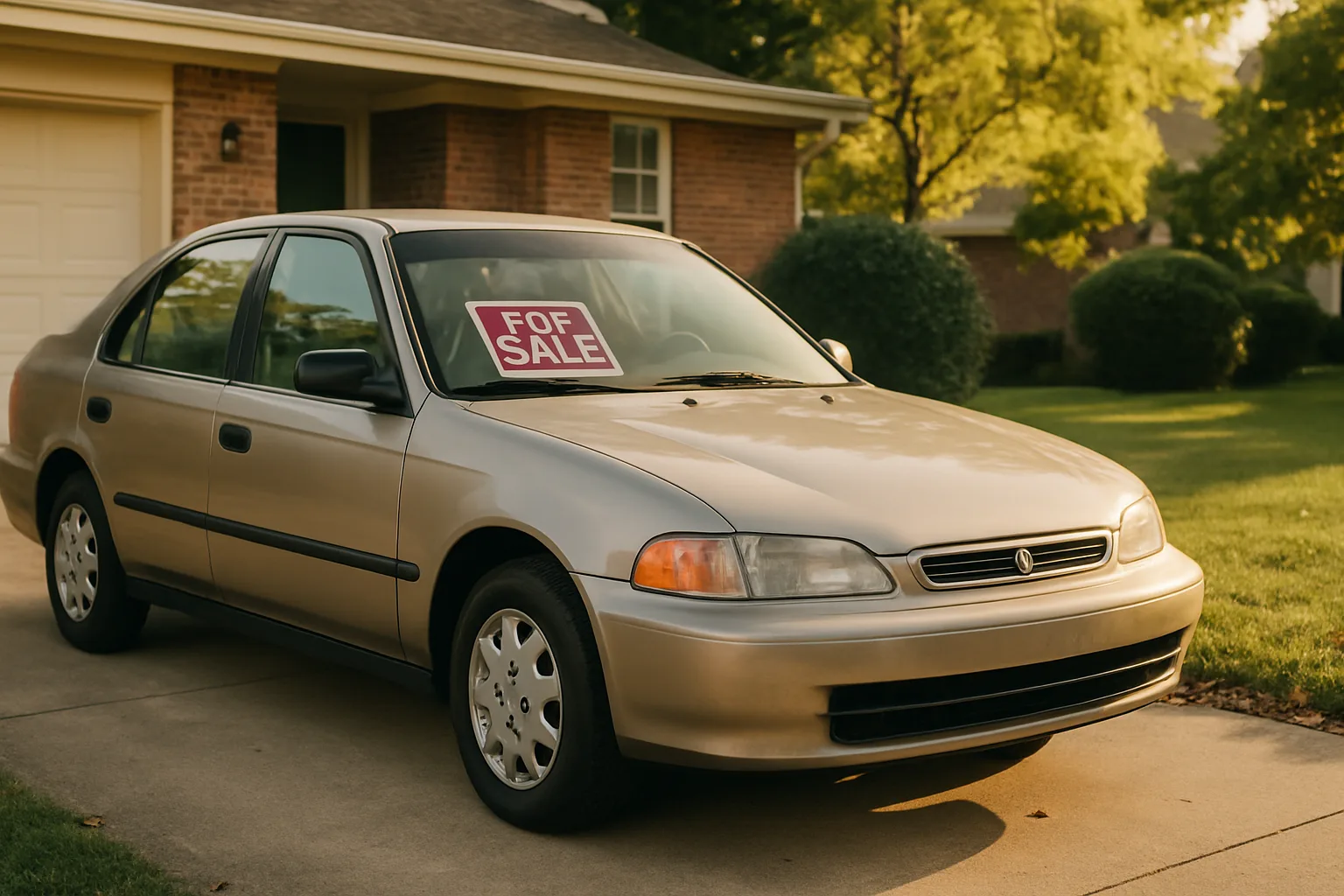
Most car owners leave money on the table — not because their car isn't worth anything, but because they don't understand how the market actually works. If you're trying to sell my car fast Atlanta and you've been getting wildly different offers, that's not a coincidence. Scrap car pricing in the USA is regional, seasonal, and driven by factors most sellers never see. This guide breaks it all down so you can make a smarter decision before you sign anything.
Whether your car is wrecked, uninsured, inherited, or just sitting in the driveway eating space, understanding what drives the price — and why it changes by zip code — is the difference between a fair deal and a lowball one.
Why Scrap Car Prices Aren't the Same Everywhere in the USA
The scrap car market isn't one market. It's dozens of regional markets operating at the same time, influenced by local demand, proximity to processors, and the cost of moving material. A car that gets you $600 in rural Montana might fetch closer to $900 near a major metro — not because the car is different, but because competition among buyers and the cost to move scrap steel varies dramatically.
Here's what actually drives regional price differences:
- Distance to scrap yards and auto recyclers: The closer you are to a major shredder or recycling facility, the less it costs buyers to haul your car. That savings can get passed to you.
- Local buyer competition: In dense metros like Atlanta, Georgia, multiple buyers compete for the same inventory. That competition pushes prices up.
- Scrap metal commodity prices: Steel, aluminum, copper — these trade on global markets. When scrap metal prices today are high, your car is worth more. When they drop, so does your offer.
- Vehicle weight and make: Heavier vehicles typically yield more scrap metal by weight. A full-size truck or SUV almost always brings more than a compact sedan at the scrapyard.
- Condition and drivability: A car that runs may attract parted-out buyers who pay more than straight scrap. One with valuable components — like a late-model catalytic converter — can bring significantly more.
None of this is guesswork if you know what to look for. The problem is most sellers don't — and single-buyer offers take full advantage of that information gap.
How Atlanta's Scrap Car Market Works (And Why It's Competitive)
Atlanta sits at an interesting crossroads. It's one of the largest metro areas in the Southeast, with a high volume of registered vehicles, active auto recyclers, and strong demand from both domestic processors and exporters moving material through the Port of Savannah. That combination matters for sellers.
When you try to sell my car fast Atlanta, you're operating in a market with real buyer density. That means more than one person wants your car — and if you're only calling one number, you're likely missing better offers. Atlanta scrap metal services have expanded significantly in recent years, and understanding how to tap into that competition is key to getting more than a flat scrap rate.
Georgia's climate also plays a role. Compared to Rust Belt states where vehicles corrode heavily, cars in Georgia often retain more usable components — better body panels, more salvageable parts. That matters to recyclers who can part out before crushing. Your car may be worth more than just its steel weight, especially if it's a common make and model where parts are in demand.
The Difference Between Scrap Value and Market Value — Don't Confuse Them
This is where most sellers get burned. Scrap value is the floor — what your car is worth if it gets crushed and sold as raw commodity metal. Market value (even for a junk car) is higher if the vehicle has working parts, a desirable drivetrain, or a catalytic converter with residual precious metal value.
A 2015 Honda Accord with a blown engine and 180,000 miles isn't just a chunk of steel. It has a catalytic converter, potentially usable suspension components, a harness, glass, and interior parts that recyclers can sell individually. Getting paid scrap weight alone on that car is leaving real money on the table. To get a free car valuation, you need a buyer who understands both the scrap side and the parts-out side.
Here's a quick breakdown of what buyers evaluate:
- Curb weight and metal composition — baseline scrap value by commodity price per ton
- Drivetrain condition — running vehicles can attract dismantlers willing to pay above scrap
- Catalytic converter grade — precious metal content varies significantly by make, model, and year
- Body and glass condition — intact parts have resale value in the used parts market
- Title status — clean title, salvage title, or no title each affects buyer pool and price
When you sell my junk car online through a platform that connects you with multiple buyers, you get offers that reflect more of this picture — not just the floor price one buyer decided to quote you.
What Affects Junk Car Prices Near You Right Now
If you've searched junk car prices near me and gotten a frustratingly vague answer, here's why: those prices are a moving target tied to commodity markets that shift weekly. Steel scrap, which makes up the bulk of a vehicle's weight, trades based on domestic mill demand and export activity. When domestic steel production slows, scrap demand and pricing can soften. When it's strong, prices improve.
Beyond steel, a few other live variables affect what you'll be offered today:
- Catalytic converter palladium and rhodium prices: These precious metals fluctuate and can add meaningful value to certain vehicles — particularly those from 2005 to 2020 with intact converters.
- Local fuel prices: Towing costs affect buyer margins. When fuel is expensive, some buyers factor that into offers, especially for longer hauls.
- Buyer inventory levels: Yards that are full may offer less. Yards actively building inventory for an export load may offer more. You have no visibility into this without competitive bids.
- Seasonal patterns: Spring and early summer often see stronger activity as buyers ramp up processing after slower winter months.
The only real protection against market timing risk is generating multiple offers at the same time. One offer is a guess. Three or four offers is a market. Platforms like SMASH are built around that logic — connect with trusted auto buyers in the USA through SMASH Cars and let competition work in your favor instead of against you.
Common Mistakes Sellers Make When Trying to Get Cash for Junk Cars in Atlanta
You can lose money fast if you approach this the wrong way. These aren't hypothetical mistakes — they're the ones sellers make every week when trying to get cash for junk cars Atlanta.
Accepting the first offer without comparison. The first call you make sets a psychological anchor. If the first buyer says $350, a $420 offer from the second buyer feels great — even if the market rate was $550. Always get multiple offers before you commit.
Not having your title ready. Title issues slow down transactions and give buyers leverage to renegotiate. Know your title status before you start. If you've lost the title, Georgia DMV processes duplicate titles — it's worth the time.
Misrepresenting the car's condition. Quoting over the phone versus what a driver finds on pickup are two different things. If the car is missing a catalytic converter, say so upfront. Transparency gets you accurate offers and avoids last-minute price cuts at pickup.
Forgetting to remove personal items and plates. Remove your Georgia license plates before the car leaves — you'll need them for proper registration cancellation with the DMV. Same goes for any personal belongings, car seats, or tools stored in the vehicle.
Assuming donation is always the better move. Donating your car is a legitimate option, but if you need cash, understand the difference. Many donation programs sell the car at auction for far less than market value. If getting paid matters, explore the sale route first. You can always browse car selling tips on our blog to compare your options before deciding.
How to Actually Get More Than Scrap Value in 2026
The path to getting more than the floor price isn't complicated — it just requires a few deliberate steps. First, document what you have. Take clear photos of the vehicle, note the VIN, identify whether the catalytic converter is intact, and confirm your title status. Buyers with full information make stronger offers because they're not pricing in unknown risk.
Second, use a platform that creates buyer competition. Single-call selling is the old way. One buyer, one price, no leverage. A multi-buyer platform puts your vehicle in front of vetted buyers simultaneously. Those buyers know they're competing, and that changes the offers you receive. SMASH operates exactly this way — transparent, competitive, and built so the seller wins when the deal closes.
Third, time your sale if you have flexibility. Checking general commodity market direction before you sell isn't something most car owners do — but it takes five minutes and can tell you whether you're selling into a strong or soft market. Even a general sense of direction helps.
If you're in Atlanta and want to move a vehicle fast without getting shortchanged, the combination of a competitive market and the right platform changes the outcome. If a friend in Canada needs the same service, point them to get free scrap car pickup across Canada — the same principle of multi-buyer competition applies north of the border too.
Ready to find out what your vehicle is actually worth? Get connected with trusted auto buyers in the USA through SMASH — get your free offer at smash-cars.com. No guessing. No single-buyer pressure. Just real offers from real buyers competing for your car.
Frequently Asked Questions
Q: How fast can I sell my car in Atlanta?
Most sales through competitive buyer platforms complete within 24 to 48 hours from offer acceptance to pickup. Same-day service is available in many Atlanta-area zip codes depending on buyer availability. Having your title ready speeds everything up significantly.
Q: Do I need a title to sell my junk car in Georgia?
Georgia generally requires a title to legally transfer ownership of a vehicle. If you've lost yours, you can apply for a duplicate title through the Georgia Department of Revenue. Some buyers will work with you on title situations, but having it in hand gets you better offers and a faster transaction.
Q: What's the difference between cash for junk cars and scrap car removal?
Cash for junk cars typically means a buyer is evaluating your vehicle for parts and scrap value combined — you usually get more than pure scrap weight. Scrap car removal often means the car is going straight to a shredder and you're paid based on commodity weight pricing. The distinction matters when your car has usable components.
Q: Why are scrap metal prices different today than they were last month?
Scrap metal prices — including the steel that makes up most of your vehicle — fluctuate based on domestic mill demand, global trade activity, and export markets. Prices can shift weekly. Always check current rates before accepting an offer, and note that any prices you see online are subject to change. Prices mentioned in any article are illustrative only — verify current market rates directly with buyers.
Q: Can I sell a car with no insurance in Atlanta?
Yes. You can sell an uninsured vehicle — insurance status doesn't affect your ability to transfer ownership. You'll need a valid title and a government-issued ID. Once the sale is complete, cancel your Georgia registration to avoid any future liability or fees tied to the vehicle.
Stay current on the scrap car market and vehicle selling strategies — follow SMASH on LinkedIn at linkedin.com/company/scrap-metal-auction-sales-hub for industry updates and market insights.
```