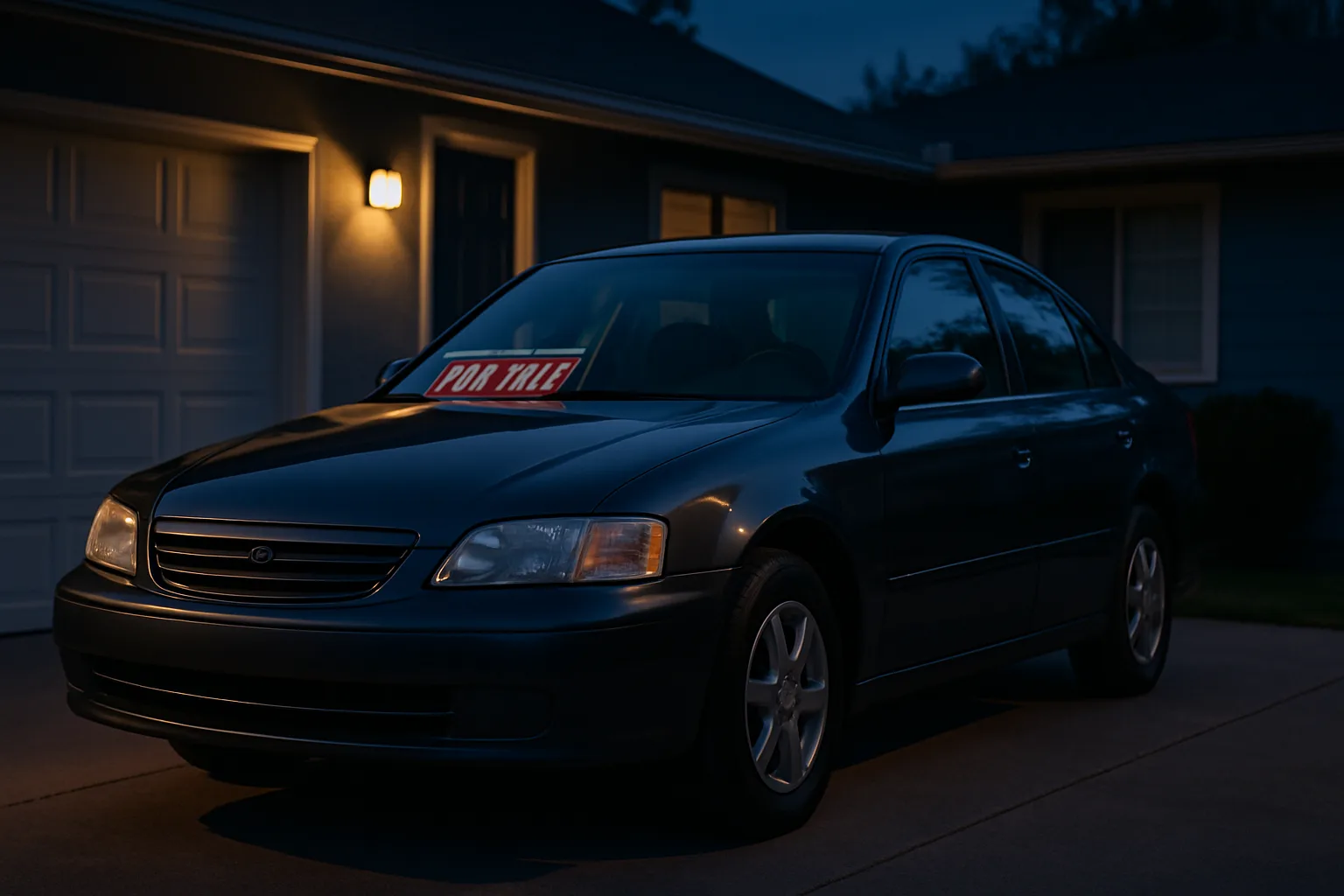
What Happens to Your Old Car After You Upgrade?
You finally pulled the trigger on a new vehicle. Good for you. But now you're standing in the driveway staring at your old car — the one with 140,000 miles on it, a busted AC, and a registration that expired eight months ago — and wondering what the hell to do with it. Most people default to the wrong move: they take the first offer that lands in their lap, usually from a single buyer lowballing them on a car they know nothing about.
Here's the thing. That old vehicle sitting in your driveway is worth more than you think. Even damaged, unregistered, or barely running, your car has real value — and in a market like San Francisco, where used vehicle demand stays strong and scrap metal prices fluctuate with global commodity markets, getting the right buyer matters. The difference between a $300 offer and a $900 offer on the same car is often just competition.
This guide breaks down exactly how to sell a car you no longer need after upgrading — the smart way, not the panic-sell way. Whether you're in San Francisco, deep in the East Bay, or anywhere across California, this process works.
Step 1 — Understand What Your Old Car Is Actually Worth
Before you accept any offer, you need a baseline. Your car's value after an upgrade depends on several factors: year, make, model, mileage, condition, whether it runs, and what's still intact under the hood. A non-running 2012 Honda Accord with a clean catalytic converter and intact airbag modules is worth meaningfully more than a stripped shell of the same model.
The catalytic converter alone can carry real value. Vehicles with platinum, palladium, or rhodium-rich converters — think Toyotas, Hondas, and certain Ford trucks — can fetch significant dollars just on that component. That's why catalytic converter auction platforms exist: because the value in a single cat can swing hundreds of dollars depending on current precious metal spot prices. Don't let a junk buyer absorb that margin without you knowing it existed.
Here's a quick checklist of value factors to assess before you call anyone:
- Does it run? Running vehicles always command more.
- Is the catalytic converter still on it? Stolen or missing cats drop value fast.
- What's the body condition? Even dented panels have scrap value.
- Do you have the title? Having it simplifies everything — but cash for cars no title no registration buyers exist and are often accessible.
- What's the curb weight? Heavier vehicles mean more ferrous scrap tonnage.
- Are there sellable parts? Wheels, doors, engines, and transmissions have secondary market demand.
Take 20 minutes to document this before you make a single call. It changes the conversation entirely.
Step 2 — Don't Sell to One Buyer. Get Competing Offers.
This is where most people leave money on the table. They call one junk car buyers near me San Francisco result, take the number they're given, and consider the transaction done. That's not a sale — that's a giveaway. A single buyer has zero incentive to offer you fair market value when they know you're comparing nothing.
Competition changes that dynamic entirely. When multiple vetted buyers know they're bidding against each other for your vehicle, the offers get serious. That's the foundation SMASH is built on. Instead of calling around manually, connect with trusted auto buyers in the USA through SMASH Cars and let a transparent process do the work. You submit your vehicle details once. Vetted buyers compete. You see real numbers.
This matters especially in a high-cost metro like San Francisco, where buyers know sellers are often juggling logistics, space constraints, and time pressure. Single-buyer transactions exploit that pressure. Competitive auctions neutralize it. More buyers means better price discovery — that's not marketing language, that's how markets work.
Step 3 — Handle the Title and Registration Reality
A lot of people hold off on selling their old car because the paperwork situation is messy. Maybe you never transferred the title after buying it used. Maybe the registration lapsed. Maybe it's tied up in an estate after a family member passed. These are real complications — but none of them are dealbreakers.
In California, selling a vehicle without a current registration is common and manageable. The DMV has specific processes for lien releases, lost titles, and estate vehicle transfers. If you're selling cash for cars no title no registration, the key is finding buyers who are experienced with these situations rather than buyers who use the complexity as a reason to lower their offer.
A few scenarios worth knowing:
- Lost title: You can apply for a duplicate through the California DMV before selling, or work with a buyer who handles the paperwork on their end.
- Estate vehicle: You'll typically need probate documentation or a court order to establish legal authority to sell. Some buyers specialize in inherited vehicles specifically.
- Expired registration: In California, you do not need a current registration to sell a vehicle for scrap or salvage — but disclose it upfront.
- Salvage title: Salvage title cars sell every day. Buyers factor the title status into the offer — just make sure you're not hiding it, or you risk voiding the transaction.
Being upfront about the paperwork situation actually builds buyer confidence. It's when sellers are vague that buyers start discounting aggressively to cover their perceived risk.
Step 4 — Document What You Have Before Anyone Picks It Up
Photo documentation is underrated when selling a scrap car in California. Buyers who never physically see your vehicle before making an offer are relying entirely on what you tell them — and what you show them. Clear photos of the exterior, interior, engine bay, undercarriage, and catalytic converter position protect both parties and prevent disputes at pickup.
Here's what to photograph before you list or request any offer:
- All four sides of the exterior (note any major damage)
- Interior front and rear (seats, dash, visible electrical)
- Under the hood — engine visible, fluid reservoirs accessible
- Catalytic converter location (under the vehicle, forward of the muffler)
- VIN plate (dashboard or door jamb)
- Odometer reading
- Any aftermarket additions — wheels, exhaust, audio equipment
This documentation also protects you if a buyer tries to revise their offer at the curb — a common tactic. When your photos match what they see, there's no leverage for a last-minute price cut. Platforms like SMASH build this into the process: documented inventory gives buyers more confidence, which means stronger offers upfront.
You can also get a free car valuation using your VIN to benchmark before you enter any negotiation. Know your number before anyone else does.
Step 5 — Schedule Pickup and Get Paid Without the Runaround
Once you've accepted an offer, logistics matter. In a dense urban environment like San Francisco — tight streets, parking restrictions, permit zones — coordinating a vehicle pickup takes more than a handshake. Make sure your buyer confirms:
- Exact pickup date and time window
- Whether they need street parking pre-cleared or can access a driveway
- Payment method — cash, certified check, or electronic transfer
- Who handles the title transfer documentation
- Whether towing is included at no charge (it should be)
Free scrap car pickup is standard among serious buyers. If someone is quoting you a tow fee, factor that into the real net offer — or find a buyer who doesn't charge it. Most cash for cars San Francisco buyers operating at volume absorb towing as a cost of doing business. Don't let that margin come out of your pocket.
Same-day or next-day pickup is realistic in the Bay Area and most major California metros. Once payment clears and the title transfers, notify the California DMV of the release of liability. This protects you from any tickets, tolls, or incidents that occur after the sale. It takes five minutes online and it matters.
For more tips on navigating the sale process — from documentation to payment — browse car selling tips on our blog. There's no shortage of ways to leave money behind in this process, and knowing the steps in advance is the best insurance you have.
Getting More Than Scrap Value Is About Process, Not Luck
The sellers who consistently get strong offers on their old vehicles aren't lucky. They document what they have, they generate competition among buyers, and they don't let urgency push them into a bad deal. That's the whole playbook — and it works whether you're selling a 2009 Nissan Altima in the Tenderloin or a lifted F-250 in Marin County.
SMASH connects sellers with vetted buyers across the United States who compete for your vehicle rather than lowball it in isolation. The process is transparent, the pickup is free, and there are no subscription fees eating into your return. You can also explore what other platforms offer — getmyscrapcar.com is another resource worth checking if you want to compare your options before committing.
When you're ready to stop letting that old car depreciate in your driveway, get connected with trusted auto buyers in the USA through SMASH — and get your free offer at smash-cars.com. The market is there. You just need to let it work for you.
Frequently Asked Questions
Q: How do I find junk car buyers near me in San Francisco?
Search for vetted buyers who operate in the Bay Area and cover San Francisco zip codes, rather than relying on the first result you see. Platforms like SMASH connect you with multiple competing buyers so you're not locked into a single lowball offer. Always confirm free towing and same-day payment before you commit.
Q: Can I get cash for cars in San Francisco without a title or registration?
Yes. Many buyers in California are experienced with no-title and expired-registration situations. Disclose the paperwork situation upfront — buyers who specialize in this won't penalize you the way a general dealer might. If you need a replacement title, the California DMV can issue a duplicate before the sale.
Q: How much is my old car worth after I upgrade to a new one?
Value depends on year, make, model, mileage, condition, and whether key components like the catalytic converter are still intact. A non-running vehicle with an intact cat can be worth significantly more than a stripped-out shell of the same model. Get a free valuation at smash-cars.com before you accept any offer.
Q: What should I do with the catalytic converter before I sell my scrap car?
Leave it on the vehicle unless you have specific knowledge of its value and a separate buyer lined up. Removing it without a clear plan can complicate the sale and may raise legal questions depending on your state. In California, selling a full vehicle with the converter intact through a vetted buyer is typically the cleanest path to maximum total value.
Q: How fast can I sell my car for cash in San Francisco?
Same-day and next-day transactions are realistic in the Bay Area. Once you submit your vehicle details, receive competing offers, and accept one, most buyers can coordinate pickup within 24 to 48 hours. Having your documentation — title, ID, and photos — ready in advance speeds the process significantly.
Follow SMASH on LinkedIn for industry updates, scrap metal market insights, and tips on getting more value from your end-of-life vehicles.