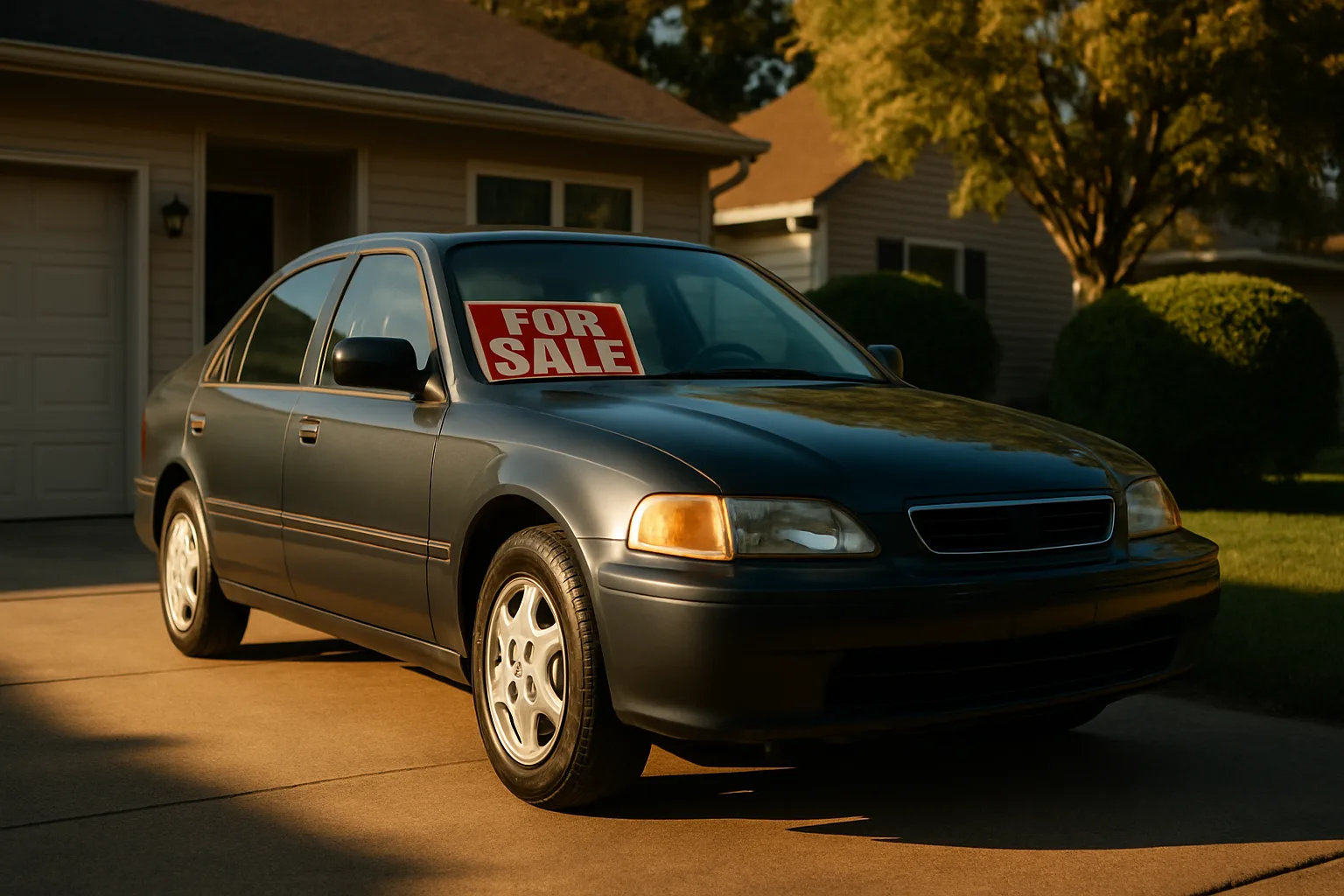
Your car got hit. Now it's sitting in your driveway, undriveable, and your insurance payout was less than you expected. What happens next? You have more options than you think — and "scrap it for whatever they'll give you" is rarely the best one.
If you're trying to sell my junk car Portland after an accident, the decisions you make in the next few days matter. The difference between settling and getting real money comes down to knowing what your vehicle is actually worth and who you're selling it to. Let's break it down.
What Happens to a Car After an Accident?
After a collision, your car falls into one of a few categories. Understanding which one applies to yours determines your best path forward.
- Repairable damage — Structural damage is minimal. The car could be fixed, but repair costs might not make financial sense for you.
- Total loss (insurance write-off) — The insurer determines repairs would exceed a set percentage of the vehicle's actual cash value. They pay you out and take the title.
- Salvage title — Once a car is declared a total loss and then repaired, it typically receives a salvage or rebuilt title. These vehicles sell for less, but they still sell.
- Non-repairable / parts only — Some vehicles are damaged beyond economical repair. These go to dismantlers, auctions, or scrap yards.
Most people assume a wrecked car is only worth its weight in metal. That thinking costs them money. Depending on the year, make, model, and what's still intact — your vehicle may have significant value in its parts, its catalytic converter, its drivetrain, or even as a whole unit to the right buyer.
Sell My Car Fast Portland: Your Post-Accident Options Compared
Portland has no shortage of car buyers, but not all offers are equal. Here's what you're actually choosing between when you decide to sell my car fast Portland after a crash.
Private Sale
Possible, but slow. Buyers on Craigslist or Facebook Marketplace get nervous around accident history. You'll face lowball offers, no-shows, and people who want a discount for the damage — then another discount for the salvage title. If the car runs, it's worth trying. If it doesn't, skip it.
Insurance Buyback
After a total loss payout, some insurers offer you the option to keep the vehicle for a reduced settlement. You take the salvage title, they take less money back. This works if you want to repair it yourself or sell it as a parts car. Know what you're getting into before you accept.
Dealership Trade-In
Dealers don't want your wrecked car. They'll take it in some cases, but the offer will be rock bottom. They're not set up to move damaged inventory — they'll either wholesale it or send it to auction anyway. Cut out that middleman.
Scrap Yard Direct Sale
Fast and simple. You call, they quote, they pick it up. But a single scrap yard quote is just that — one number, with no competition behind it. If you want to know whether it's fair, you need more than one data point. That's where platforms designed around buyer competition change the equation.
Online Auto Buyer Platforms (Like SMASH)
This is where the market has shifted. Connecting your damaged vehicle to multiple vetted buyers means the price discovery happens through competition, not guesswork. Connect with trusted auto buyers in the USA through SMASH Cars and let the market tell you what your vehicle is actually worth — not just what one yard is willing to pay on a Tuesday morning.
How to Figure Out What Your Damaged Car Is Actually Worth
Before you accept any offer, get your numbers straight. A scrap car value calculator gives you a baseline — but it's just a starting point. Scrap value is based on the vehicle's curb weight and the current price of steel and aluminum. A 2019 Honda Accord weighs roughly 3,000 lbs. At current metal prices, the raw scrap value might be a few hundred dollars. But that same Accord has a catalytic converter, functioning airbags (pre-deployment), a transmission, and a set of wheels that all carry additional value.
Factors that affect what your post-accident car is worth:
- Year, make, and model — Common vehicles with high parts demand hold more value even damaged.
- Mileage — Lower mileage means components are less worn and more attractive to dismantlers.
- Extent of damage — Front-end collision vs. rear-end vs. rollover affects what's salvageable.
- Whether the engine and transmission are intact — Drivetrain components drive significant value.
- Catalytic converter condition — On eligible vehicles, an intact cat is worth real money. VIN lookup tools help confirm exact specs.
- Title status — Clean title, salvage title, or no title all affect buyer interest differently.
- Location — Being in Portland means access to a strong regional buyer network and easy logistics for pickup.
Want to get a free car valuation before you commit to anything? Do that first. You'll negotiate from a position of knowledge, not desperation.
Selling a Written-Off or Salvage Title Car in Oregon
Oregon has specific rules around salvage titles, and knowing them protects you from getting burned in the transaction. If your insurer declared your vehicle a total loss and issued a payout, the title typically transfers to them. If you bought it back, you'll be working with a salvage title — and you need to disclose that to any buyer.
Here's what Oregon requires when selling a salvage or damaged vehicle:
- Disclose the title status — Selling a salvage title car without disclosure is fraud. Don't do it.
- Transfer the title correctly — Oregon DMV has specific transfer requirements. Make sure you fill out the assignment of title section accurately and keep a copy.
- Bill of sale — Document the sale price, date, vehicle details, and both parties' information. This protects you after the sale.
- Release of liability — File a release of liability with Oregon DMV so you're not on the hook if the new owner gets a ticket or causes an accident.
Selling through a platform that handles documentation properly — photo documentation, packing lists, auto-invoicing — removes a lot of this friction. Explore scrap car removal services at GetMyScrapCar if your vehicle is beyond repair and you want a fast, clean transaction with no paperwork headaches.
For Portland residents, Portland scrap metal services are available for vehicles that are being sold for parts or scrap weight — a practical option when damage is severe enough that parts value doesn't exceed the metal value.
Don't Leave Money on the Table: Why Competitive Offers Beat Single Quotes
Here's the old way: You call one number from a roadside sign, they give you a quote, and you either take it or hang up and try again. That's not price discovery. That's guessing.
The better way is to let multiple vetted buyers compete for your vehicle. Competition is how markets work. When a buyer knows they're not the only offer on the table, they price more aggressively. When you only talk to one buyer, they price for themselves.
SMASH operates on this principle. Rather than connecting you to a single buyer who controls the conversation, the platform puts your vehicle in front of a network of buyers. More buyers means better price discovery. That's not a slogan — it's how auctions have worked for centuries.
Whether you're selling a flood-damaged SUV, a rear-ended pickup, or a written-off sedan still sitting in a Portland impound lot, the approach is the same: document it accurately, get it in front of the right buyers, and let competition do the work. Browse car selling tips on our blog for more guidance on getting the most from your sale.
What to Do Right Now If You Have a Damaged Car to Sell
Stop letting it sit. A damaged vehicle depreciates in real time — weather exposure, rodents, fluid leaks, and battery drain all reduce what a buyer is willing to pay. The faster you move, the more you get.
Here's your action list:
- Pull your title — Know whether it's clean, salvage, or if the insurer holds it. This determines your options.
- Document the damage honestly — Take photos from multiple angles. Buyers trust sellers who show the real condition upfront.
- Identify what's intact — Catalytic converter, tires, rims, engine, transmission. Make a list.
- Get a baseline valuation — Use a scrap car value calculator as a floor, not a ceiling.
- Connect with multiple buyers — Don't accept the first offer. Use a platform that puts your vehicle in front of real competition.
- Handle paperwork cleanly — Oregon release of liability, proper title transfer, bill of sale. Do it right.
You didn't plan for the accident. But you can plan the sale. If you're ready to move, connect with trusted auto buyers in the USA through SMASH Cars and get a real offer on your damaged vehicle — without the runaround.
Frequently Asked Questions
Q: Can I sell my junk car in Portland without a title?
It depends on the buyer and the vehicle's age. Oregon allows title-exempt transfers for vehicles over a certain age and value threshold, but most buyers will want a title or at least proof of ownership. If you've lost your title, apply for a duplicate through Oregon DMV before you start soliciting offers — it makes the transaction cleaner and protects you legally.
Q: How long does it take to sell my car fast in Portland after an accident?
With the right buyer network, same-day or next-day offers are realistic. Pickup can often be arranged within 24–48 hours once an offer is accepted. Private sales take longer — sometimes weeks — especially with a salvage title involved. If speed matters, skip the private market.
Q: Does accident damage always mean my car is only worth scrap value?
No. The type and location of damage matters a lot. A vehicle with heavy front-end damage but an intact rear drivetrain, functioning catalytic converter, and good tires still has meaningful parts value beyond raw metal weight. Get an actual offer before you assume scrap is the ceiling.
Q: What's the difference between scrap value and salvage value for a damaged car?
Scrap value is what the vehicle is worth purely as recycled metal — based on its weight and current steel prices. Salvage value accounts for reusable parts, mechanical components, and the possibility that a buyer can repair and resell the vehicle. Salvage value is almost always higher. Selling to a buyer who sees the salvage opportunity — not just a scrap yard that only weighs it — is where you recover more money.
Q: Do I need an inspection to sell my damaged car in Oregon?
If you're selling as-is for scrap or salvage, no inspection is required. Oregon does not mandate a pre-sale vehicle inspection for private party or scrap sales. However, if the vehicle is going to be titled and driven again after repairs, the new owner will need to go through Oregon's salvage inspection process. That's their responsibility, not yours.
If your wrecked car is sitting and losing value by the day, now is the time to act. SMASH connects sellers with a network of vetted buyers across the United States — no subscription fees, no guessing, no single-buyer pressure. Get your free offer at smash-cars.com and find out what your damaged vehicle is actually worth in today's market.
Follow SMASH on LinkedIn for weekly market updates, scrap metal pricing insights, and tips for getting more from your next vehicle sale.
```