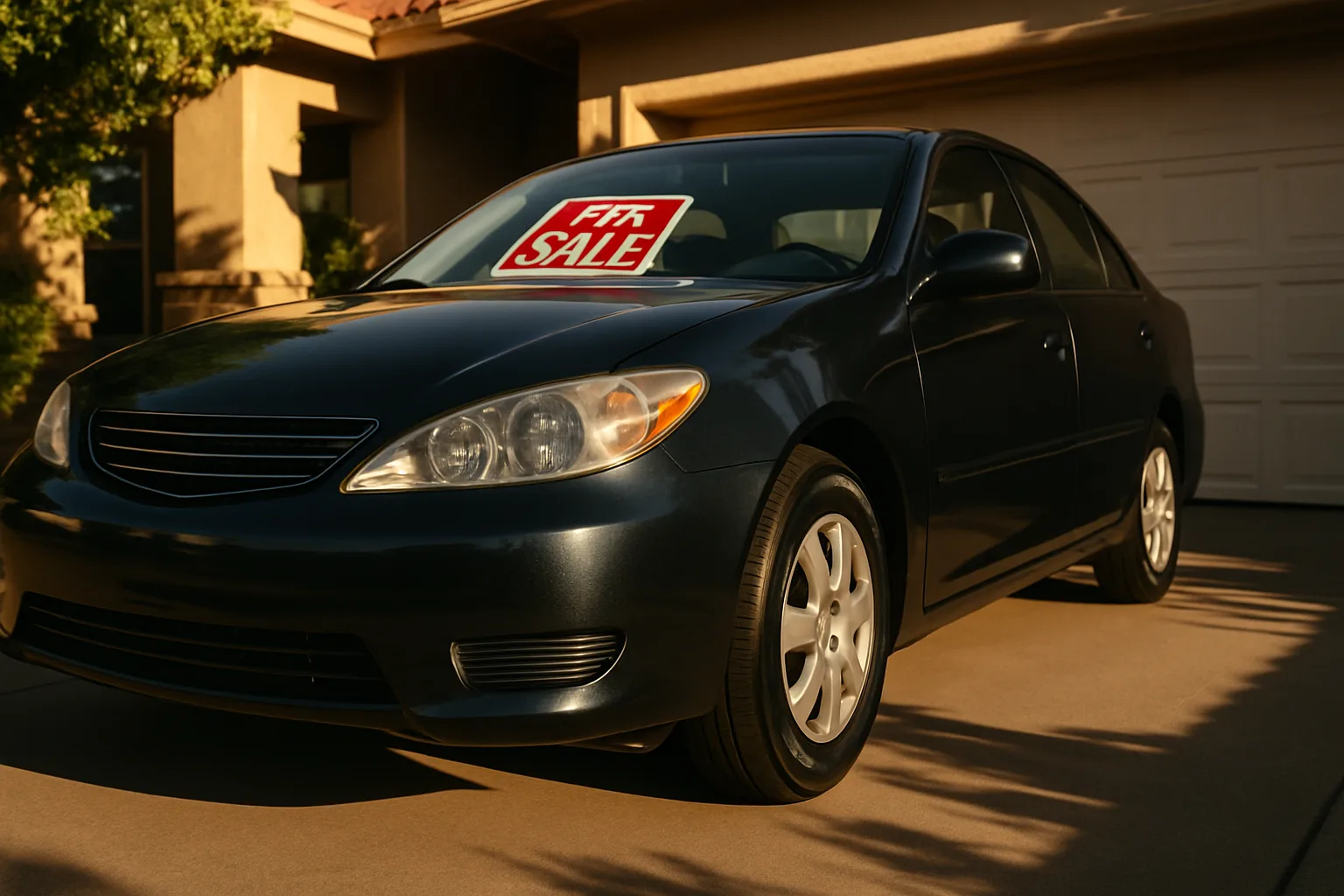
Most people don't realize their donated car might be worth more as a sale than a write-off. Car donation sounds simple — you hand over the keys, get a tax receipt, feel good. But the process has more moving parts than charities let on, and donors in places like Riverside, California often leave real money on the table without knowing it.
This guide walks you through the full car donation process in the United States — step by step — so you know exactly what happens to your vehicle, what you actually get back, and whether donation is the right move or whether selling makes more financial sense.
If your vehicle is damaged, uninsured, inherited, or just sitting in the driveway collecting dust, read this before you commit to anything. You deserve the full picture before you sign anything over.
Step 1 — Decide If Car Donation Is Actually Right for You
Donation feels generous. It is. But it is not always the smartest financial decision for the vehicle owner. Before you call a charity, ask yourself three honest questions.
- Does your vehicle have more value than you think? Even junk cars — non-running, no title, missing keys — can fetch real cash from the right buyer. A running vehicle in Riverside could be worth several hundred to a few thousand dollars depending on make, model, and condition.
- Do you itemize your tax deductions? If you take the standard deduction, you get zero tax benefit from donation. The deduction only helps if you itemize — and most Americans don't.
- Is the charity reputable? Some car donation programs sell vehicles to middlemen who take the majority of the proceeds. The charity gets a fraction. You get a small deduction. Everyone wins except you and the cause you intended to support.
If you answered no to any of those, selling your car — even for scrap — likely puts more value back in your pocket and the process is just as fast. That said, if donation is the right call, here's exactly how it works.
Step 2 — Choose a Qualified Charity (This Part Matters More Than You Think)
Not all charities are equal when it comes to vehicles. The IRS has strict rules about what counts as a deductible donation, and the charity must be a registered 501(c)(3) organization for your donation to qualify. You can verify this on the IRS Tax Exempt Organization Search tool at irs.gov.
When vetting a charity, ask these direct questions before committing:
- What percentage of the vehicle's sale value goes directly to your programs?
- Do you use a third-party vehicle remarketing service, or handle sales in-house?
- How will you determine the fair market value reported on my tax receipt?
- How long does the process typically take from pickup to receipt?
Many charities outsource their vehicle programs to for-profit remarketing companies. That is not illegal, but it means a significant cut leaves the charitable mission entirely. Local organizations in California — food banks, veterans' support groups, community health programs — sometimes offer more direct-to-cause models worth considering.
Step 3 — Gather Your Documents Before You Schedule Anything
Missing paperwork is the number one reason car donations stall or fall apart. Get organized before you make a single call. Here is what you need:
- Certificate of Title (Pink Slip): California requires the title to transfer a vehicle. If you have lost it, apply for a duplicate through the California DMV before proceeding. This takes time — plan ahead.
- Release of Liability: File this with the California DMV the day the vehicle leaves your possession. This protects you from any tickets, tolls, or liability after the car is gone.
- Odometer Disclosure: Required for vehicles under ten years old in most states, including California.
- Your ID: Driver's license or government-issued identification.
- Lien Release: If you ever had a loan on the vehicle, confirm the lien has been cleared. Charities cannot accept a vehicle with an active lien without complications.
No title? No keys? You may still have options — but donation programs are often less flexible on this than private buyers or junk car removal services. If your documentation situation is messy, free junk car removal from GetMyScrapCar may be a faster path forward than trying to push a title-deficient vehicle through a charity's intake process.
Step 4 — Schedule Pickup and Understand What Happens to Your Car
Most registered car donation programs offer free scrap car pickup — including in the Riverside area. You schedule a time, they send a tow truck, and you hand over the keys (if you have them) and the signed title. The pickup is typically free of charge regardless of whether the car runs.
Here is what happens after pickup — and this is where most donors are kept in the dark:
- If the car runs and is in reasonable condition, the charity may sell it directly at auction or through a dealer. You typically receive a receipt showing the actual sale price — and your deduction is capped at that amount.
- If the car doesn't run or has significant damage, it often goes to a salvage yard or scrap metal recycler. The charity gets scrap metal prices for it — which may be well under $500 depending on current scrap metal prices today.
- If the charity uses a third-party program, the vehicle may be sold quickly at a wholesale price with a percentage split between the remarketer and the charity.
You will not always know which path your car takes. That is a legitimate concern if you're hoping to maximize either the charity's benefit or your own tax write-off.
Step 5 — Handle the Tax Receipt and IRS Rules Correctly
This is where many donors get tripped up at tax time. The IRS rules on car donations changed years ago and are stricter than most people expect.
If the charity sells your car for more than $500: Your deduction equals the actual sale price — not the Kelley Blue Book value, not what you thought it was worth. The charity must send you IRS Form 1098-C within 30 days of the sale showing the gross proceeds.
If the charity sells your car for $500 or less: You can deduct the lesser of the vehicle's fair market value or $500.
If the charity uses the vehicle directly (a program car, shuttle van, etc.) rather than selling it, you may deduct the fair market value — but you need written acknowledgment from the charity stating this explicitly.
File IRS Form 8283 with your tax return if the deduction exceeds $500. For deductions over $5,000, you generally need a written appraisal. Browse car selling tips on our blog for more guidance on maximizing value from your vehicle, whether you're donating or selling outright.
Donation vs. Selling: Which Puts More in Your Pocket?
Here is the honest comparison most car donation websites won't show you. For a vehicle worth $2,000 at fair market value that a charity then sells at auction for $800, your tax deduction is $800. If you are in the 22% federal tax bracket, that saves you approximately $176 in taxes.
If you sold that same vehicle privately for $1,500 — or even $900 to a cash buyer — you walk away with real money, not a tax offset. That math matters, especially if the car was inherited from an estate, came with no keys, or carries a salvage title. Those vehicles can still attract serious interest from junk car buyers near me within 20 mi who specialize in non-standard purchases.
Sellers in Riverside who have gone through the SMASH Cars process often discover their vehicle is worth more than one buyer's initial quote suggested. Competition changes prices. Even in a tight scrap market, connect with trusted auto buyers in the USA through SMASH Cars and see what your car actually gets when multiple buyers can see it.
That transparency is the core difference between taking the first offer and finding out what the market actually says your vehicle is worth. Whether you ultimately donate or sell, knowing your car's real value before you commit is always the right first move.
If you are in Riverside, California and not sure where to start, get a free car valuation before you schedule any pickup — donation or otherwise. It costs nothing and takes minutes.
Donating a car is a genuine way to support causes you care about. Just go in with both eyes open. Know your documents, know your charity, know your tax situation, and know your vehicle's value. If the donation math works for you — great. If it doesn't, selling your car fast through a trusted buyer puts real cash in your hand the same day. Either way, SMASH makes it easy to find out what you're actually working with before you decide.
Frequently Asked Questions
Q: Can I donate a car without a title in California?
Most legitimate charities require a clear title to accept a vehicle donation in California. Without it, the legal transfer of ownership gets complicated. If you've lost your title, apply for a duplicate through the California DMV first — or explore cash buyers who specialize in cash for cars no title no keys near me, as they often have more flexible intake processes than donation programs.
Q: Does free scrap car pickup Riverside include non-running vehicles?
Yes. Most car donation programs and junk car removal services in Riverside will tow a non-running vehicle at no cost to you. The pickup fee is typically absorbed by the buyer or charity. Always confirm this upfront so there are no surprise charges deducted from your offer or receipt.
Q: How long does the car donation process take from start to finish?
Once your paperwork is in order, most charities can schedule a pickup within two to seven business days. After pickup, the tax receipt timeline depends on how quickly the charity sells the vehicle — which can take anywhere from a few days to several weeks. Factor this in if you need your documentation by a specific tax deadline.
Q: What is my donated car actually worth for tax purposes?
If the charity sells the vehicle, your deduction equals the actual sale price — not the estimated value. This often surprises donors who assumed they'd deduct Kelley Blue Book value. For vehicles valued under $500, you may deduct fair market value up to that cap. Always get the IRS Form 1098-C from the charity to document your deduction correctly.
Q: Is junk car removal Riverside different from donating my car?
Yes — they are fundamentally different transactions. Junk car removal in Riverside typically means selling your vehicle to a buyer who pays you cash and arranges pickup. Car donation means transferring ownership to a charity in exchange for a potential tax deduction. Neither path is automatically better — it depends on your tax situation, vehicle condition, and financial goals. Compare both before you decide.
Ready to find out what your vehicle is actually worth before you commit to donating or selling? Connect with trusted auto buyers in the USA through SMASH Cars and get your free offer at smash-cars.com — no pressure, no obligation, just a real number.
Follow SMASH on LinkedIn for scrap metal market insights, industry updates, and practical tips for getting the most from your unwanted vehicle.
```