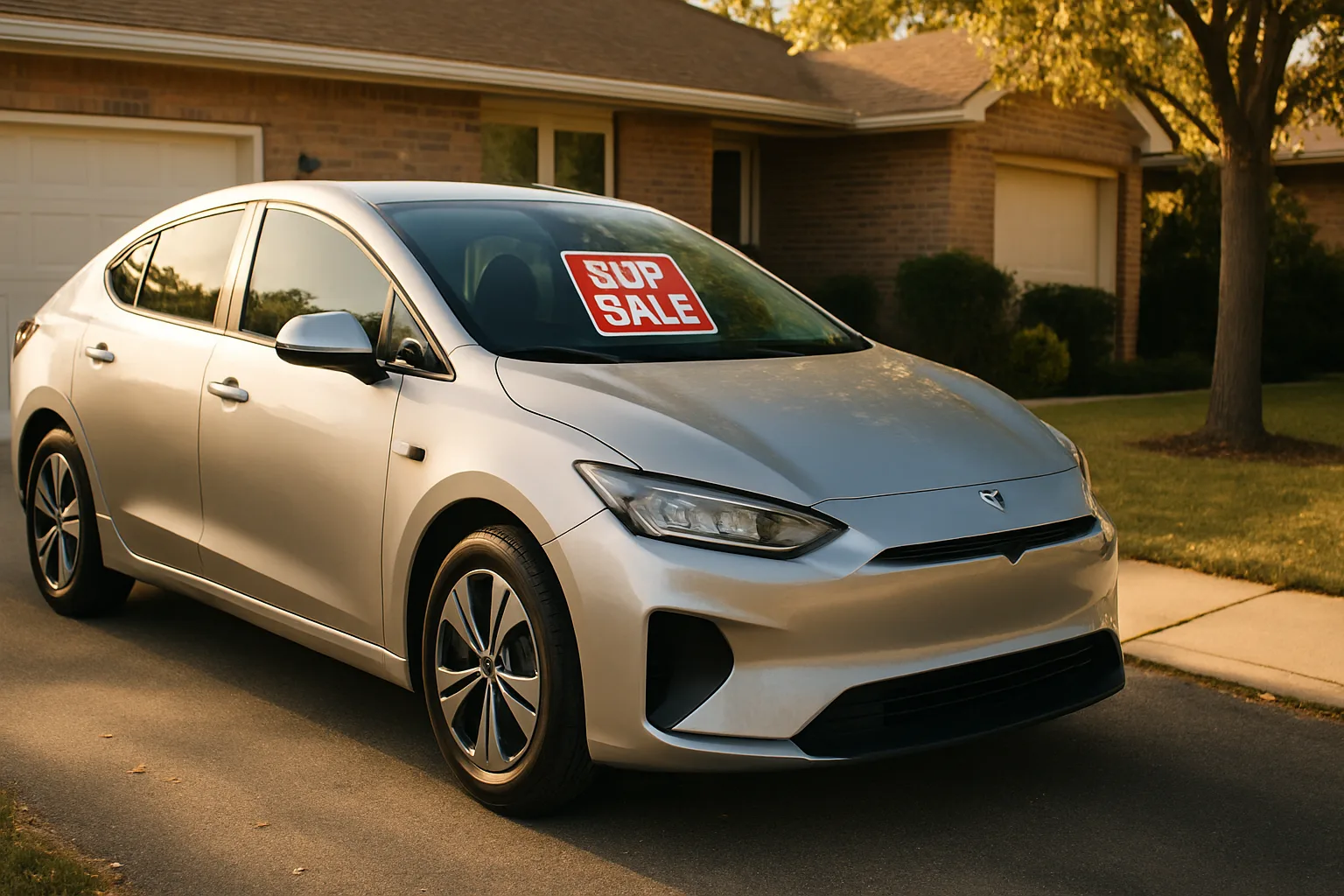
What Actually Happens to an EV Battery When the Car Dies?
Most people assume a dead electric vehicle is just scrap. Strip the copper, crush the body, done. But the battery pack sitting under that EV's floor? That's a different story — and in 2026, it's one of the most contested questions in the recycling industry. If you're trying to sell my junk car Tampa and that car happens to be an EV, you need to understand what's driving the value (and the complexity) before you accept your first offer.
EV battery packs are heavy, chemically complex, and increasingly regulated. A single pack from a mid-size sedan can weigh between 900 and 1,200 pounds. It contains lithium, cobalt, nickel, manganese, and copper — materials that are worth real money but require specialized handling to recover safely. Scrap it wrong and you're looking at a fire hazard, a regulatory violation, or money left on the table.
The EV End-of-Life Problem Nobody Warned You About
Electric vehicles are hitting end-of-life in serious numbers now. The first wave of mainstream EVs sold between 2013 and 2018 are aging out. Accident writeoffs, flood damage, degraded range, failed battery management systems — the reasons a car becomes unwanted don't change just because it runs on electrons instead of gas.
What does change is the disposal pathway. A conventional junk car has a fairly predictable scrap value — strip the catalytic converter, pull any resalable parts, then sell the body as shredder feed. EV end-of-life is messier. Battery packs can't just go into the shredder without discharge and preparation. Many states, including Florida, have updated hazardous material handling requirements for lithium-ion battery disposal as of 2025-2026. That adds cost and compliance steps to any transaction.
For the car owner, this creates a real problem: traditional buyers may low-ball you because they're pricing in that handling cost. Or they'll just pass on the vehicle entirely. That's why using a platform that connects you with trusted auto buyers in the USA through SMASH Cars matters — buyers who actually specialize in EVs and know what the battery pack is worth will bid differently than a generic yard.
What's Inside an EV Battery and Why It Has Scrap Value
Understanding the commodity breakdown helps you push back on lowball offers. EV battery packs aren't just "batteries." They're dense assemblies of cells, modules, wiring, cooling systems, and structural components — all of which contain recoverable materials.
Here's what's typically recoverable from a lithium-ion EV battery pack:
- Lithium: Used in battery manufacturing. Demand is high and domestic supply is limited, which keeps recovery value strong.
- Cobalt: A critical mineral found in many NMC (nickel-manganese-cobalt) chemistries. Prices fluctuate significantly but cobalt remains a high-value target for recyclers.
- Nickel: Found in high-nickel cathode chemistries increasingly common in newer EVs. Trades as a non-ferrous commodity.
- Copper: Wiring, busbars, motor windings — an EV has substantially more copper than a comparable ICE vehicle. Copper is priced per pound at your local yard.
- Aluminum: Battery enclosures and structural trays are commonly aluminum, adding to the non-ferrous recovery weight.
- Steel: Frame and body structure still trades as ferrous scrap, though at lower per-pound values.
The catch: most of the high-value battery materials require hydrometallurgical or pyrometallurgical processing to actually recover. That's industrial chemistry, not a hammer and a conveyor belt. Specialized battery recyclers — companies like those partnered with OEM take-back programs — are the real buyers for intact packs. A general scrap yard may only pay for the weight of the enclosure metals unless they have a downstream partner for the cells.
Sell My Car Fast Tampa: What EV Sellers Need to Know Right Now
Tampa and the broader Florida market are seeing a growing number of end-of-life EVs enter the used and scrap pipeline. Florida was among the top five states for EV adoption in the early 2020s, which means the attrition curve is hitting now. Flood-damaged EVs from storm events, aging lease returns, and accident write-offs are all showing up at yards and on listings across the state.
If you want to sell my car fast Tampa and that car is an EV, here's what affects your offer:
- Battery state of health (SOH): A pack that still holds 70%+ capacity has resale value for second-life applications — energy storage, grid backup, industrial use. A degraded or damaged pack goes straight to recycling. These are two very different price points.
- Brand and chemistry: Not all battery packs are equal. Tesla packs, for example, have an active secondary market for salvage buyers who resell modules. A less-common EV brand may have fewer specialty buyers competing for the pack.
- Damage type: Thermal runaway damage, flood immersion, or deep discharge can make a pack essentially non-negotiable in value — it becomes a hazardous material disposal situation. Mechanical damage to the vehicle with an intact pack is a different story.
- Title status: A salvage title or rebuilt title affects overall vehicle value but doesn't eliminate it. Buyers focused on parts and materials don't care about the title the way a retail buyer would.
- Documentation: VIN, battery serial, charge history (if available from OBD data or manufacturer portals) — documented inventory gives buyers more confidence and can improve your offer.
You can also get a free car valuation before you commit to anything — know what you're working with before the first buyer shows up at your driveway.
Regulation Update: What's Changing for EV Disposal in 2026
The regulatory landscape for EV battery disposal is moving fast. In 2026, several overlapping frameworks are shaping how end-of-life EV batteries are handled in the U.S.:
Federal guidance: The EPA has continued to tighten hazardous waste classification for lithium-ion batteries, particularly for damaged or partially discharged packs. Sellers who hand off a vehicle with a compromised battery pack to an unprepared buyer may share liability if improper disposal follows. Using a vetted buyer matters — not just for price, but for compliance.
State-level extended producer responsibility (EPR): Several states have enacted or are implementing EPR frameworks that require manufacturers and importers to fund battery collection and recycling. Florida has been watching these developments but as of mid-2026 has not yet enacted a comprehensive EV battery EPR statute. That may change. For now, Florida sellers should ensure their buyer has a documented downstream recycling pathway for battery materials.
Transportation rules: Damaged lithium-ion batteries are regulated as hazardous material under DOT rules. Moving a vehicle with a damaged pack — even towing it — requires specific handling protocols. Reputable buyers will know this. If a buyer shows up without any awareness of these requirements, that's a red flag.
For local guidance on how Tampa scrap metal services apply to end-of-life EV handling in your area, working with buyers who operate in the Florida market and understand state-specific requirements is the smarter move.
Getting More Than Scrap Value for Your End-of-Life EV
The single biggest mistake EV owners make when trying to sell scrap car in Florida is accepting the first offer without testing the market. A general scrap buyer may quote you based on vehicle weight alone — treating your EV like a stripped-out beater with nothing interesting inside. That's a losing strategy when your car has a 1,000-pound battery pack with recoverable critical minerals.
The right approach:
- Get multiple offers. Competition reveals the market. A platform that surfaces multiple vetted buyers — including specialty EV dismantlers, battery recyclers, and parts resellers — will generate better price discovery than a single phone call to a local yard.
- Separate the asset types in your mind. The vehicle body has one value. The battery pack may have a separate and higher value to the right buyer. A buyer who handles both may offer more than one who only sees shredder feed.
- Document everything upfront. Photos of the pack, VIN, any warning codes, charge status — the more information you provide, the more confidently a buyer can bid. Uncertainty = lower offers.
- Don't rush into donation without comparing cash offers first. Car donation has its place, but if your EV has a high-value battery pack, the cash value may significantly exceed the tax deduction benefit. Run the numbers.
Platforms like SMASH are built for exactly this situation — bringing multiple informed buyers to your vehicle instead of leaving you to guess which yard will treat the asset seriously. Browse car selling tips on our blog for more practical guidance on getting the most from a junk or damaged vehicle sale.
If you'd rather skip the EV complexity entirely and explore traditional vehicle scrap options, you can also explore scrap car removal services at GetMyScrapCar for straightforward end-of-life vehicle pickup.
Frequently Asked Questions
Q: Can I sell my junk car in Tampa if it's an electric vehicle with a damaged battery?
Yes, but you need the right buyer. A damaged EV battery doesn't eliminate value — it changes which buyers are interested. Specialty EV dismantlers and battery recyclers will often offer more than a general scrap yard for a vehicle with a recoverable or recyclable pack. Use a platform that connects you with multiple buyer types to get a real offer.
Q: What are junk car prices per ton for electric vehicles in Florida?
EV scrap pricing is more complex than standard ferrous pricing per ton because the battery pack is priced separately from the vehicle body. The body structure follows general steel and aluminum scrap market rates, while the battery pack value depends on chemistry, state of health, and current commodity prices for lithium, cobalt, nickel, and copper. Prices fluctuate — always check current rates before accepting an offer.
Q: How do I sell my junk car near me in Tampa without getting lowballed?
The best defense against a lowball offer is competition. Get at least three quotes from different buyer types — general scrap yards, specialty EV buyers, and online platforms. Document your vehicle thoroughly with photos, VIN, and any known battery information. More documentation means more buyer confidence, which usually means better offers.
Q: Is it legal to sell a flood-damaged EV in Florida?
You can sell a flood-damaged vehicle in Florida, but disclosure requirements apply and the title will reflect the damage history. For EV-specific concerns, a flood-damaged lithium-ion battery pack may be classified as a hazardous material depending on its condition. Work with a buyer who understands DOT and EPA handling requirements for damaged battery packs to avoid compliance issues.
Q: Does SMASH handle EV vehicle sales in the Tampa area?
SMASH connects sellers with vetted buyers across the United States, including the Tampa and broader Florida market. Whether your vehicle is a conventional gas car, a hybrid, or a fully electric vehicle at end of life, the platform is designed to surface competitive offers from buyers who specialize in different vehicle and material types — not just whoever answers the phone first.
---The EV end-of-life conversation is only going to get louder. More vehicles are aging out, regulations are tightening, and the buyers who know what a battery pack is actually worth are getting more competitive. You don't have to navigate that alone. Get connected with trusted auto buyers across the USA through SMASH — and find out what your vehicle is actually worth at smash-cars.com.
Stay ahead of scrap market shifts and industry updates — follow SMASH on LinkedIn for the latest in scrap metal pricing, regulation changes, and auction insights.
```